Why Do I Wake Up Sweating? Menopause and Thermoregulation
Discover the exact biological mechanics of menopausal night sweats. Learn how plummeting estrogen levels violently break the brain's hypothalamus, destroying deep sleep thermoregulation.
Executive Summary
Discover the exact biological mechanics of menopausal night sweats. Learn how plummeting estrogen levels violently break the brain's hypothalamus, destroying deep sleep thermoregulation.
For Millionen of women navigating the transition into menopause, the nighttime environment transforms from a sanctuary of rest into a violently unpredictable biological battleground.
A woman can fall asleep perfectly comfortably in a cool room. But at 2:00 AM, she is suddenly and violently jolted completely awake. Her heart is racing with intense palpitations. A massive, crushing wave of heat completely envelops her chest and neck, followed milliseconds later by profuse, soaking sweat that completely drenches her sleepwear and the underlying mattress.
Minutes later, as the sweat rapidly evaporates, she is plunged into violent, freezing shivers.
This devastating physiological explosion is clinically known as a Vasomotor Symptom, universally referred to as a “Hot Flash” or “Night Sweat.”
Society deeply normalizes this as an annoying rite of passage. Clinical neurobiology views it as a severe, systemic failure of the brain’s master thermoregulatory architecture. It destroys the exact thermodynamic physics required to actively sustain deep sleep.
The Hypothalamus Thermostat
The foundation of human sleep is entirely rooted in temperature physics. To successfully descend into the restorative, towering Delta waves of Stage 3 NREM sleep, the human brain absolutely mandates that the core body temperature must physically drop by roughly 2°F to 3°F.
The biological thermostat that controls this entire operation is a tiny region located deep at the base of the brain called the Hypothalamus.
In a healthy, pre-menopausal adult, the hypothalamus acts exactly like the thermostat on a wall. It reads the current body temperature, decides if it is too hot or too cold, and seamlessly adjusts blood flow to silently maintain a perfectly stable, slightly cool internal environment.
The Estrogen Collapse
During the transition into menopause (perimenopause), the ovaries begin a highly erratic, massive shutdown. The production of the primary female sex hormone, Estrogen, violently plummets.
Estrogen is not merely a reproductive hormone; it is a profound neurological stabilizer.
Crucially, the hypothalamus is absolutely densely packed with very specific estrogen receptors. It relies directly on the heavy, smooth presence of estrogen to smoothly calibrate the “neutral” zone of the body’s thermostat.
When the estrogen violently vanishes from the bloodstream, the hypothalamus essentially suffers a catastrophic software glitch. Its “Thermoneutral Zone”—the tiny window of temperature where the brain feels perfectly comfortable—narrows to an impossibly razor-thin margin.
The Violent Override
- The False Alarm: The woman is lying in bed, sleeping soundly. Her body temperature rises by a minuscule fraction of a degree (perhaps she pulled the blanket slightly too high). Normally, the hypothalamus would ignore this tiny variation. But because it is entirely starved of estrogen, it violently panics. It interprets the 0.1-degree rise as a severely lethal overheating event.
- The Vasodilation Dump: To “save” the body from this non-existent overheating crisis, the hypothalamus violently smashes the biological panic button. It orders immediate, massive Vasodilation. Every single blood vessel near the surface of the skin on the chest and face violently dilates, aggressively dumping core body heat out into the environment.
- The Adrenaline Shock: Simultaneously, to force the sweat glands to fire at maximum capacity, the brain blasts the nervous system with a massive surge of adrenaline.
It is physically impossible for the brain to remain asleep while experiencing a massive cardiovascular heat dump paired with an adrenaline spike. The deep sleep architecture is instantly, violently shattered.
Architectural Defense
Because menopausal night sweats are rooted in a fundamental neurological glitch, overcoming them requires aggressive environmental thermoregulation to prevent the hypothalamus from ever registering a heat increase in the first place.
- Active Microclimate Engineering: Standard air conditioning is insufficient because the mattress itself traps and reflects body heat back into the biological system. The absolute gold standard intervention involves active liquid-cooling mattress technology that continuously circulates 55°F (13°C) water directly beneath the sleeper, ruthlessly pulling core heat away from the body all night long.
- The Hormone Vector: For severe architectural collapse, clinical intervention via meticulously monitored, bioidentical Hormone Replacement Therapy (HRT) physically restocks the hypothalamus with the estrogen it desperately requires to finally reboot its broken thermostat.
Deepen Your Rest Architecture.
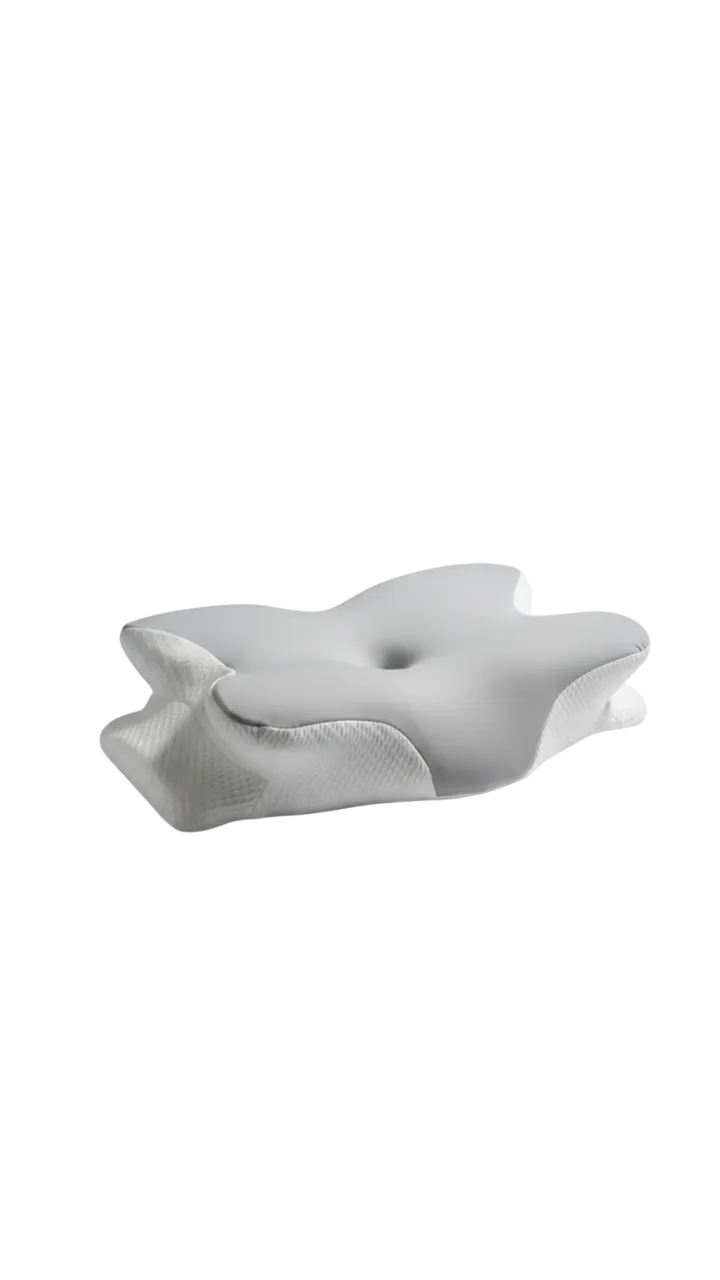
The Lunari Butterfly Pillow naturally supports proper cervical alignment, unlocking deeper, uninterrupted sleep cycles.