Why Is It Hard to Sleep While Pregnant? Hormones and Sleep Architecture
Discover the staggering neurobiology of pregnancy insomnia. Learn how massive surges in progesterone, physical organ displacement, and fetal sleep cycles completely shatter maternal sleep architecture.
Executive Summary
Discover the staggering neurobiology of pregnancy insomnia. Learn how massive surges in progesterone, physical organ displacement, and fetal sleep cycles completely shatter maternal sleep architecture.
Pregnancy is universally recognized as one of the most physically demanding biological events a human body can undergo. Yet, society often dismisses the staggering exhaustion of expectant mothers as a simple side effect of “carrying extra weight.”
This entirely trivializes the clinical reality.
From the exact moment of conception, the maternal neuroendocrine system undergoes a violent, systemic rewiring. This biochemical upheaval fundamentally alters how the brain structurally approaches sleep. Pregnancy does not simply make you tired; it surgically dismantles your baseline sleep architecture, piece by piece, across all three trimesters.
Trimester One: The Progesterone Crash
The absolute most shocking sleep disruption occurs almost immediately in the first trimester, long before there is any physical weight to carry.
The moment a woman becomes pregnant, her body begins manufacturing astronomically high levels of a hormone called Progesterone. Progesterone is vital for maintaining the structural integrity of the uterine lining, but it is also a profoundly powerful central nervous system depressant.
It acts structurally very similar to a heavy sedative.
The massive, unprecedented surge in progesterone slams into the brain’s GABA receptors, causing crippling, unavoidable daytime exhaustion. Women in their first trimester often report feeling completely physically drugged during the day.
However, this massive sedation completely paradoxically ruins nighttime sleep architecture. Because the brain is heavily saturated with a depressant during the day, the natural buildup of Adenosine (sleep pressure) is fragmented. When the mother attempts to sleep at night, she falls asleep instantly but continuously experiences severe micro-arousals and highly fractured rest, waking up completely unrestored.
Trimester Three: The Mechanical Siege
By the third trimester, the hormonal chaos stabilizes, but the biological challenge shifts from neurochemistry to raw physical mechanics.
- The Somatic Crush: As the fetus reaches terminal size, it physically crushes the entirely of the maternal internal organ structure. The uterus compresses the bladder to a fraction of its normal volume, forcing the mother to wake entirely up three to six times a night to urinate (Nocturia), repeatedly shattering any continuous blocks of deep Delta-wave sleep.
- The Thermal Engine: A pregnant woman is physically operating two distinct metabolic engines. The sheer thermodynamic heat generated by the growing fetus drastically raises the mother’s core body temperature. Because deep sleep uniquely requires the core body temperature to drop by roughly 2°F to 3°F, the brain struggles massively to initiate Slow-Wave Sleep while the body feels like a literal furnace.
- The Fetal Collision: Finally, the mother is sharing her biological space with an independent nervous system. By the third trimester, the fetus has developed its own distinct circadian rhythm and REM sleep cycles. Bizarrely, fetal awake periods are incredibly active during the maternal night. The mother is constantly jerked awake by violent, physical kicking originating from inside her own body.
Engineering the Maternal Environment
A pregnant woman cannot out-will the biology of gestation. She must aggressively engineer the external physical environment to counteract the internal chaos.
- The Thermal Chamber: Because the core body temperature is artificially elevated, the ambient temperature of the bedroom must be utterly freezing. Dropping the thermostat to a hyper-cooled 63°F–65°F (17°C–18°C) physically assists the maternal brain in executing the thermal dump required to reach deep sleep.
- The Gravity Offset: The sheer biomechanical torque of a third-trimester abdomen destroys the spine’s zero-gravity neutrality, causing severe pelvic and lower back pain. Using a highly engineered, C-shaped structural body pillow physically wedges beneath the abdomen and between the knees, manually unloading the mechanical shear force off the lumbar spine and preventing pain-induced micro-arousals.
Sleep during pregnancy is not a luxury; it is the fundamental biological bedrock required to safely construct a brand new human nervous system.
Deepen Your Rest Architecture.
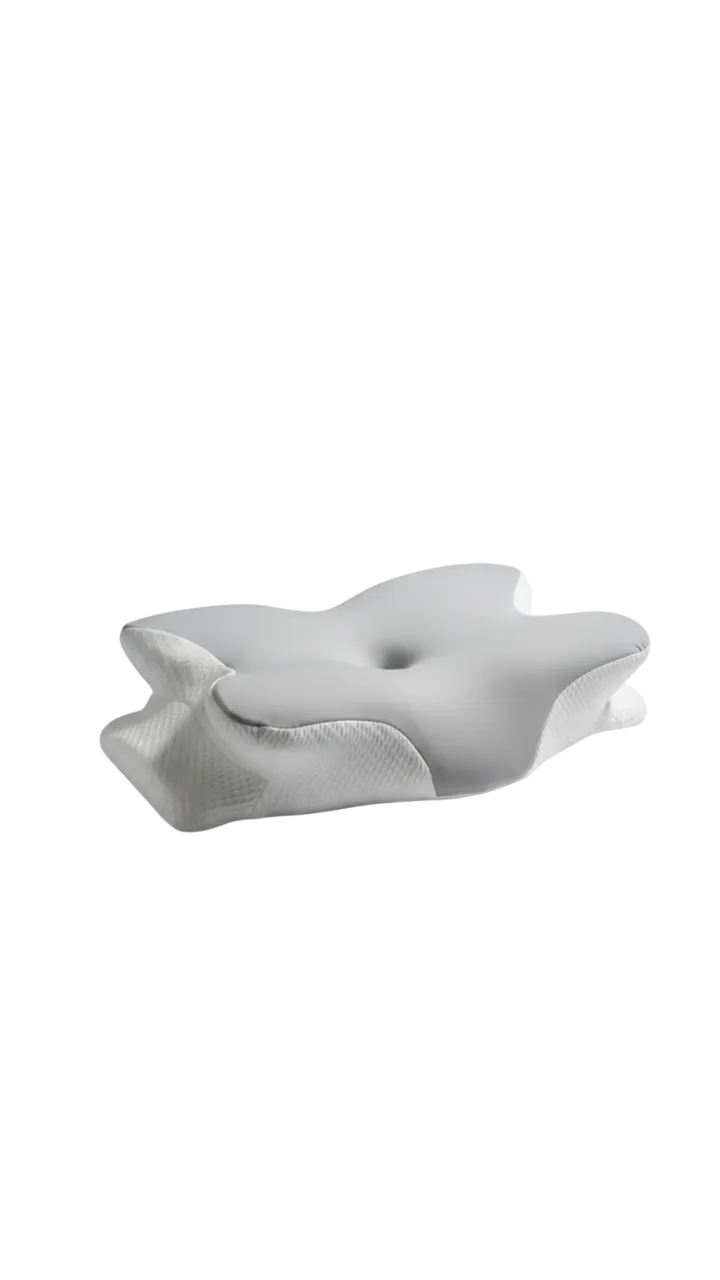
The Lunari Butterfly Pillow naturally supports proper cervical alignment, unlocking deeper, uninterrupted sleep cycles.