Does Alcohol Help You Sleep? The Truth About Chemically Sedated Rest
Discover why a 'nightcap' is a biological disaster. Learn the brutal difference between natural sleep and chemical sedation, and how alcohol absolutely annihilates your REM sleep.
Executive Summary
Discover why a 'nightcap' is a biological disaster. Learn the brutal difference between natural sleep and chemical sedation, and how alcohol absolutely annihilates your REM sleep.
It is one of the most deeply entrenched, socially normalized biological myths in modern existence: The belief that a “nightcap”—a few glasses of wine or a strong measure of whiskey before bed—helps you sleep better.
People swear by this routine because they physically observe the immediate effect: When they drink alcohol, they lose consciousness faster. That is an undeniable fact.
However, clinical neuroscience reveals a much darker reality. Losing consciousness is unequivocally not the same biological operation as falling asleep. When you consume alcohol before bed, you are not engaging natural, restorative sleep architectures.
You are engaging in a state of Chemical Sedation. And what it does to the highly delicate structure of your brain waves overnight is nothing short of a biological massacre.
The Sedation Illusion
Alcohol is a class of drug known as a central nervous system depressant. When it crosses the blood-brain barrier, it binds heavily to the brain’s GABA receptors. GABA is the primary inhibitory neurotransmitter in the brain; it essentially acts as a chemical blanket, dragging the raw electrical firing rate of the neocortex to a grinding halt.
This rapidly forces you to lose consciousness. You did not peacefully cross the beautifully synchronized threshold of natural hypnagogia into light sleep. You simply knocked your higher brain centers out through synthetic chemical force.
While you are unconscious, the damage to your sleep architecture truly begins.
The Blockade of REM Sleep
Alcohol is one of the most powerful suppressors of Rapid Eye Movement (REM) sleep known to pharmacology.
As your body struggles to violently metabolize the toxins in your liver, the alcohol circulating in your bloodstream actively chemically blocks the brain’s ability to transition into the dreaming state. If you consume a heavy amount of alcohol, you will spend the entire first half of the night completely lacking REM sleep.
Why is this so destructive? REM sleep is the absolute foundation of cognitive processing. It is the exact brain state required to consolidate short-term memories into long-term storage, scrub emotional trauma from the nervous system, and wire complex motor skills into your physical memory.
By chemically blocking REM sleep, you wake up the next day incredibly emotionally volatile, deeply unfocused, and suffering from catastrophic memory retention deficits.
The Rebound and the Awakening
The ultimate tragedy of alcohol-induced sleep is what happens deeply in the middle of the night.
After several hours, your incredibly efficient liver successfully filters the bulk of the alcohol out of your bloodstream. The chemical sedation wears off. But your brain has a massive problem: it has been violently starving for the REM sleep it was denied earlier in the night.
To compensate, the brain initiates a furious, panicked physiological event known as the REM Rebound. It violently attempts to cram an entire night’s worth of dreaming into whatever hours you have left.
This erratic, chaotic rebound is often accompanied by highly intense, bizarre, and terrifying nightmares.
Even worse, as the sedation lifts, the brain violently swings the other way into a hyper-active, sympathetic stress state. This is exactly why almost everyone who drinks heavily before bed suddenly snaps wide awake at 3:00 AM or 4:00 AM, heart racing, slightly sweating, completely incapable of falling back to asleep. The alcohol is gone, and the withdrawal has fractured the sleep architecture entirely.
The Ultimate Compromise
If you are serious about optimizing your deep biological recovery, testosterone production, and memory consolidation, using alcohol as a sleep aid is structurally identical to using a hammer to solve advanced engineering equations.
If you choose to consume alcohol, the biological rule of thumb is brutally simple: Metabolic Clearance.
The human body metabolizes roughly one standard unit of alcohol every hour. If you consume two glasses of wine, you must allow for an absolute minimum of two to three hours of complete sobriety and active water flushing before your head hits the pillow to allow the brain pure, drug-free access to its deepest neurological depths.
Deepen Your Rest Architecture.
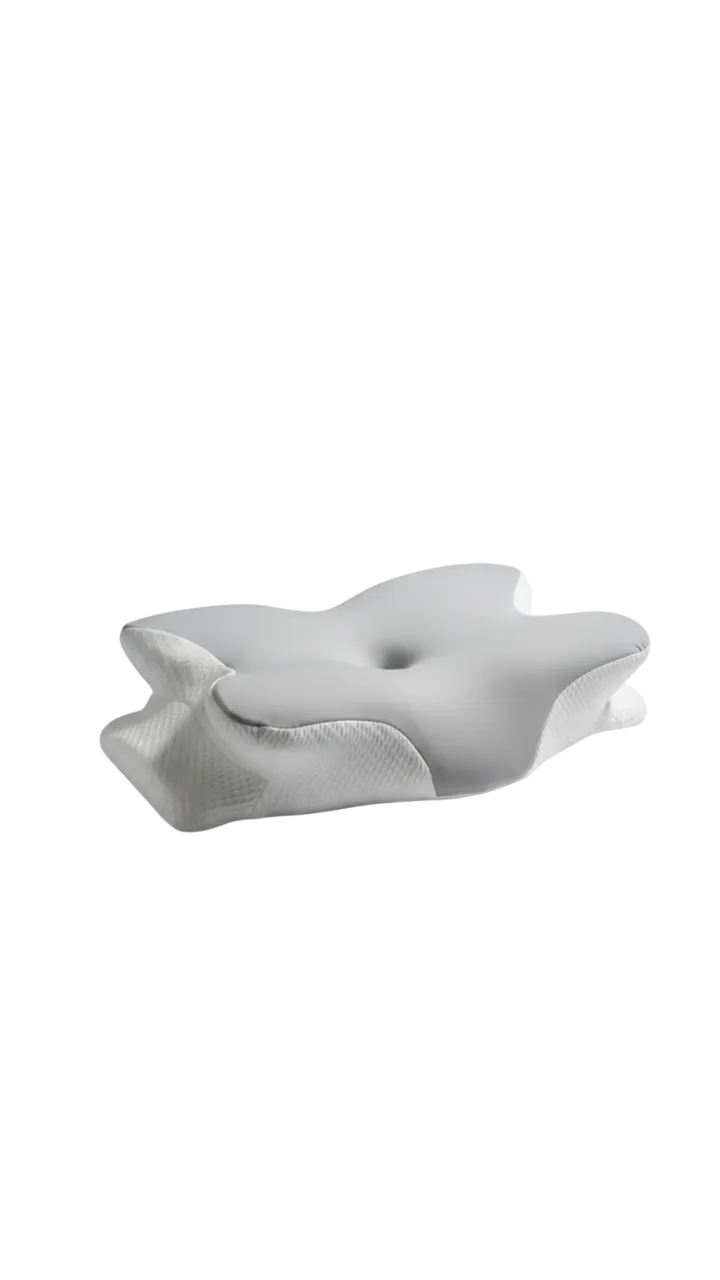
The Lunari Butterfly Pillow naturally supports proper cervical alignment, unlocking deeper, uninterrupted sleep cycles.