The Orthosomnia Epidemic: When Tracking Your Sleep Causes Severe Insomnia
The anxiety of the algorithm. Diagnosing the rising clinical phenomenon where highly optimized individuals develop crippling 'Performance Anxiety' regarding their Oura Ring or Whoop Strap scores.
Executive Summary
The anxiety of the algorithm. Diagnosing the rising clinical phenomenon where highly optimized individuals develop crippling 'Performance Anxiety' regarding their Oura Ring or Whoop Strap scores.
The modern health optimization movement has democratized incredible clinical technology. Millions of individuals now wear sophisticated biometric sensors (Oura Rings, Whoop straps, Apple Watches, Garmin monitors) that record heart rate variability, skin temperature, and highly granular sleep architecture data every single night.
In theory, this data should empower the individual to make positive behavioral changes. In reality, for a massive subset of the population, it has generated an entirely new, deeply ironic psychiatric condition: Orthosomnia.
Orthosomnia is the clinical definition for an obsessive, unhealthy preoccupation with achieving “perfect” sleep data, to the point where the anxiety of tracking the sleep actually causes severe, intractable insomnia.
1. The Physics of Performance Anxiety
Human sleep is the ultimate biological paradox: It is the only biological function that fails harder the more you try to do it.
If you want to lift a heavier weight, you recruit more muscle fibers and try harder. If you want to solve a complex math equation, you focus intensely and try harder. But if you lie in bed at 11:00 PM and “try harder” to fall asleep, the brain interprets that intense conscious effort as a massive stressor. It floods the bloodstream with Cortisol and Adrenaline, pushing you further and further away from unconsciousness.
Sleep requires absolute surrender. It requires the prefrontal cortex to completely let go of control.
When an individual becomes obsessed with their sleep tracker, they turn the bedroom into a High-Stakes Performance Arena. They lie in bed calculating: “My Whoop strap says I only got 12% deep sleep yesterday, so I mathematically must fall asleep in the next 4 minutes to guarantee a 95% recovery score tomorrow, otherwise my workout will be ruined.”
This obsessive calculation triggers the amygdala. The brain senses a threat (the threat of failing the algorithm). The heart rate spikes. The core temperature rises. The individual has now guaranteed they will spend the next three hours staring at the ceiling in a state of sheer panic.
2. The Nocebo Effect (The Morning Sabotage)
Orthosomnia doesn’t just destroy the onset of sleep; it destroys the psychological reality of the following day.
- The Placebo Effect occurs when a fake pill makes you feel better because you believe it will.
- The Nocebo Effect is the dark twin: A negative belief physically manifests negative biological symptoms.
An individual wakes up at 7:00 AM. They actually feel subjectively decent. They grab a cup of coffee and feel ready for the day. Then, they open their Oura Ring app. The screen aggressively flashes in red text: “Readiness Score: 42. You received inadequate REM sleep. Take it easy today.”
The exact second the individual reads that algorithmic warning, the Nocebo Effect strikes. Their brain immediately internalizes the “failure.” They suddenly feel exhausted. They suddenly feel brain-fogged. They cancel their gym session and perform terribly at work, entirely due to the psychological suggestion imposed by the algorithm.
3. The Accuracy Illusion
To shatter the grip of Orthosomnia, the individual must realize that the data is not the absolute truth.
While modern wearables are phenomenal at tracking your Heart Rate Variability (HRV) and your total stationary time in bed, they are absolutely terrible at accurately staging sleep architecture (differentiating between Light, Deep, and REM sleep).
The only clinical way to accurately stage sleep architecture is via an EEG (Electroencephalogram), tracking the literal electrical waves inside the skull. A smartwatch is simply calculating micro-movements of your wrist and fluctuations in your pulse, attempting to guess what your brainwaves are doing. Clinical studies routinely show that commercial wearables are only roughly 60% to 70% accurate at sleep staging compared to laboratory polysomnography.
You are developing crippling physiological anxiety over an algorithm that is frequently guessing incorrectly.
4. The Blind-Fire Protocol
If you are suffering from Orthosomnia, you do not necessarily need to throw your $300 tracker in the garbage, but you must execute a strict Information Quarantine.
- The 14-Day Blind Run: You will continue to wear the device to track the underlying data, but you must physically delete the application from your smartphone, or surrender the password to a spouse. For 14 straight days, you will wake up and assess your energy levels purely subjectively. You must relearn how to “listen” to your actual biological body, rather than obeying an algorithmic master.
- The Nightstand Ban: You are permanently forbidden from checking your sleep data while physically lying in the bed. The bedroom must represent absolute surrender. If you must check the data, it can only occur at 12:00 PM, purely as a retrospective data point, never as an active morning grade.
Stop attempting to achieve 100%. The stress of perfection is exactly what is keeping you awake.
Deepen Your Rest Architecture.
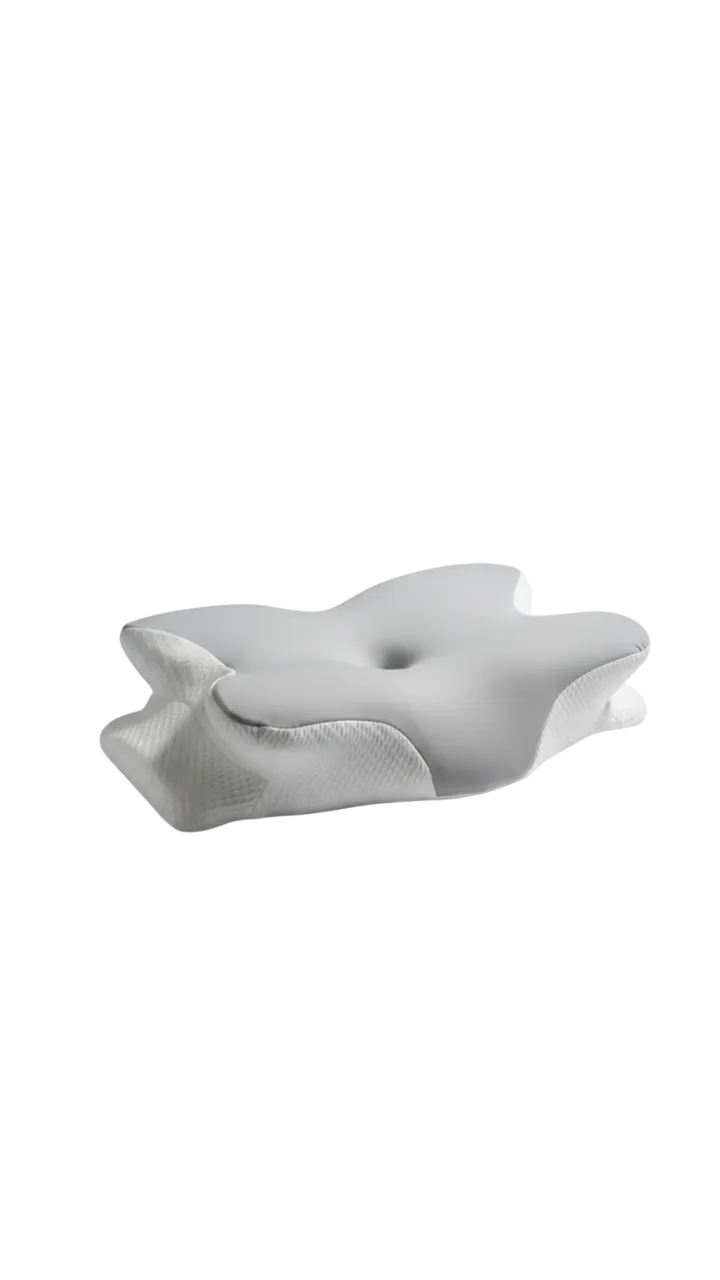
The Lunari Butterfly Pillow naturally supports proper cervical alignment, unlocking deeper, uninterrupted sleep cycles.