The Alcohol Sleep Trap: Why Drinking Helps You Fall Asleep But Ruins Your Night
Dismantling the 'Nightcap' myth. Why alcohol acts as a heavy central nervous system depressant to knock you unconscious, but mathematically guarantees a 3:00 AM panic-induced wake-up.
Executive Summary
Dismantling the 'Nightcap' myth. Why alcohol acts as a heavy central nervous system depressant to knock you unconscious, but mathematically guarantees a 3:00 AM panic-induced wake-up.
It is one of the most culturally entrenched and biologically destructive myths in modern society: The Nightcap.
For decades, exhausted adults have relied on a massive glass of Cabernet or a stiff whiskey to “take the edge off” a stressful day and help them fall asleep. Subjectively, the individual believes the alcohol was highly effective. They finish the drink, get into bed, their anxiety vanishes, and they instantly lose consciousness.
Scientifically and neurologically, they did not fall asleep. They were simply mildly anesthetized.
Alcohol is the single most powerful, commercially available destroyer of human sleep architecture. It is a massive cellular toxin that forces the brain into a catastrophic two-part cycle: A violent chemical suppression followed by a violent chemical rebound.
1. The Sedation Trap (Part I)
Alcohol belongs to a class of drugs known as central nervous system (CNS) depressants.
When you consume two glasses of wine immediately before bed, the alcohol crosses the blood-brain barrier and violently binds to GABA receptors. GABA is the brain’s primary inhibitory neurotransmitter (the exact same pathway targeted by Xanax).
The alcohol artificially floods the brain with massive sedation. The prefrontal cortex powers down. The anxiety of the day disappears. You lose consciousness incredibly quickly.
However, sedation is not sleep. If an electroencephalogram (EEG) were attached to your brain, the electrical waves would not look like the beautifully synchronized, restorative Delta waves of healthy sleep. The brainwaves would appear highly chaotic and un-patterned, identical to the brainwaves of a patient under heavy surgical anesthesia. The brain is not repairing cells or scrubbing adenosine; it is simply paralyzed by a toxin.
2. The REM Blockade
As the alcohol sedates the brain during the first half of the night, it concurrently executes a massive blockade against the dream state.
Alcohol is one of the single most potent suppressors of Rapid Eye Movement (REM) sleep in pharmacology. During the first three to four hours of the night, the brain is biologically incapable of entering REM. Because REM is computationally responsible for processing daily emotional stress and locking factual data into long-term memory, drinking before bed ensures that yesterday’s anxiety remains entirely un-processed and your memory consolidation is severely fractured.
3. The Rebound and The 3:00 AM Wake-Up (Part II)
This is where the trap violently springs shut.
Because alcohol is a toxin, the liver works frantically throughout the night to metabolize and clear it from the bloodstream. By roughly 2:00 AM or 3:00 AM, the liver successfully processes the final drops of alcohol.
The immediate second the alcohol leaves the system, the artificial sedation abruptly stops. The brain realizes that it has been starved of REM sleep for four hours. The brain panics.
It executes a massive overcorrection known as the REM Rebound. The brain rockets out of deep slumber and violently forces itself directly into an incredibly intense, hyper-active dream state. This sudden neurological explosion spikes the heart rate, floods the bloodstream with adrenaline, and triggers the amygdala.
You wake up at 3:15 AM. Your heart is racing. You are covered in sweat (a byproduct of the liver metabolizing ethanol into acetaldehyde). You feel a massive wave of generalized anxiety, and your brain is suddenly incredibly hyper-active. You try to go back to sleep, but the adrenaline is too high. You toss and turn for three hours until the alarm goes off.
4. The Autonomic Tachycardia
Beyond the brainwaves, alcohol destroys the mechanical recovery of the heart. During healthy sleep, the resting heart rate drops by 15-20 beats per minute, granting the cardiovascular system millions of missed beats over a lifetime.
When alcohol is in the system, the sympathetic nervous system is trapped in a permanent state of “Fight or Flight” as the body battles the toxin. Your resting heart rate remains elevated by 10 to 15 beats per minute for the entire night. Your body is running a marathon while you are lying perfectly still in bed.
5. The Clearance Matrix
If you want to consume alcohol without destroying your sleep architecture, you must obey the clearance mathematics of the human liver.
The liver can process exactly one standard drink per hour. If you want to have two glasses of wine, you cannot drink them at 9:00 PM and go to bed at 10:30 PM. The alcohol must be entirely metabolized before you initiate sleep.
You must adopt the European model: Drink the two glasses of wine at 6:00 PM with an early dinner. By 10:00 PM, the liver will have cleared the toxin, the heart rate will have decelerated, and the natural sleep architecture can engage without the threat of the 3:00 AM adrenaline rebound.
Do not use a toxin as a tranquilizer. Protect the architecture.
Deepen Your Rest Architecture.
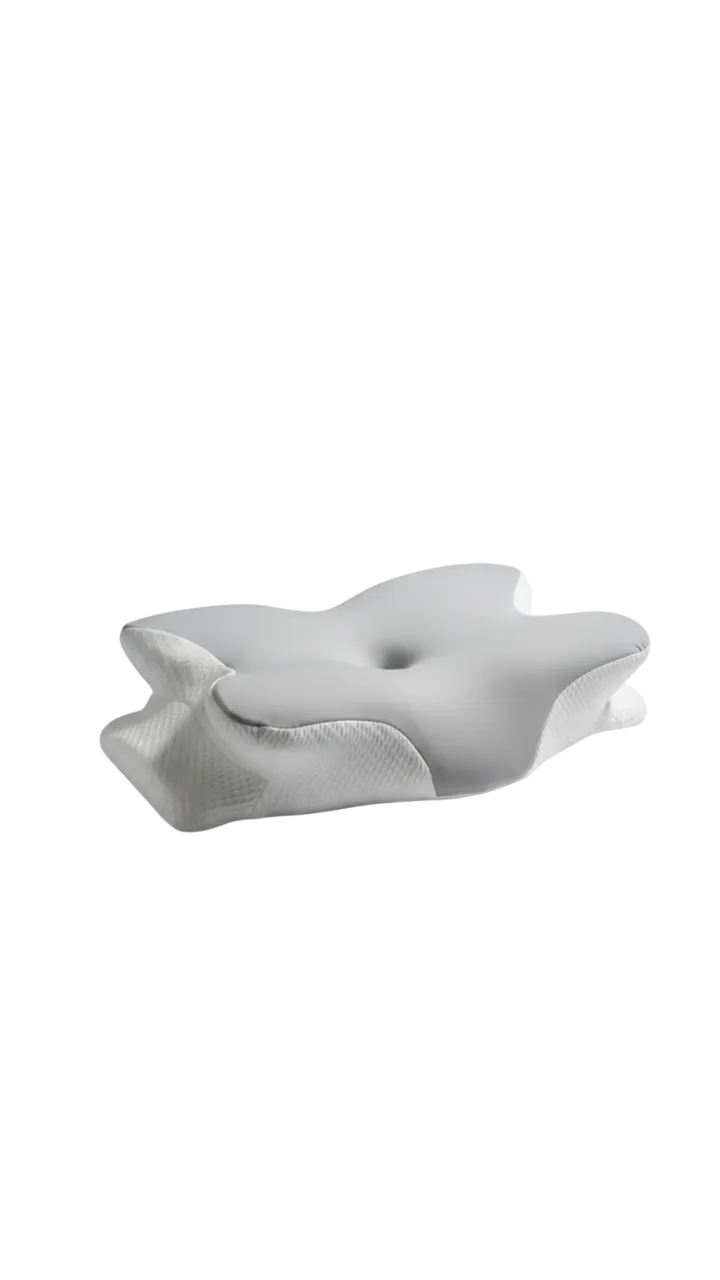
The Lunari Butterfly Pillow naturally supports proper cervical alignment, unlocking deeper, uninterrupted sleep cycles.