Why Do Dolphin Chronotypes Have Insomnia? Nervous System Hyper-Arousal
Discover the evolutionary biology of the Dolphin chronotype. Learn why a genetically hyper-vigilant nervous system causes chronic, fragmented insomnia.
Executive Summary
Discover the evolutionary biology of the Dolphin chronotype. Learn why a genetically hyper-vigilant nervous system causes chronic, fragmented insomnia.
While Lions effortlessly conquer the early morning and Bears seamlessly navigate standard society, there exists a rare genetic chronotype that suffers continuously. Representing approximately 10% of the entire human population, the Dolphin Chronotype rarely experiences deep, mathematically consecutive sleep.
They are the chronic insomniacs. They wake up to the faintest sound of a floorboard creaking two rooms away. They struggle with perpetual sleep latency, lying awake for hours vividly analyzing past conversations and future anxieties.
However, a Dolphin is not biologically broken. They are executing brilliant, highly evolved survival software that is currently spectacularly misfiring inside the safety of a modern bedroom.
1. The Unihemispheric Sleep Concept
To understand why a Dolphin chronotype cannot easily descend into deep Delta sleep, you must understand their namesake.
Actual aquatic dolphins possess a masterful neurological trait called Unihemispheric Slow-Wave Sleep. An aquatic dolphin cannot simply power down its entire brain to sleep. If it did, it would sink to the bottom of the ocean and drown. Instead, a dolphin puts only exactly half of its brain to sleep at a time. One hemisphere achieves deep rest while the other hemisphere literally stays completely awake, keeping one eye visibly open to monitor for sharks and to ensure they surface for oxygen.
Human Dolphin chronotypes possess the genetic equivalent of this trait. While humans do not actually sleep with only half their brain, the Dolphin chronotype’s entire central nervous system operates on a state of severe biological hyper-arousal. Their brain fundamentally refuses to fully power down and relinquish control.
2. Sympathetic Nervous System Dominance
For a Bear to fall asleep, their body seamlessly transitions from the Sympathetic nervous system (fight or flight) into the Parasympathetic nervous system (rest and digest).
A Dolphin’s internal neurochemical wiring is exceptionally sensitive. Their biological baseline is heavily skewed toward Sympathetic dominance. The Dolphin’s adrenal glands maintain a steady, low-level stream of cortisol and adrenaline throughout the evening.
From an evolutionary standpoint, the Dolphin was the genetic scout. While the Bears and Lions slept deeply, the Dolphin remained half-awake, hyper-tuned to the environment, listening intently for the subtle snap of a twig that would indicate an approaching predator.
Because their brain is structurally scanning for danger, they are neurologically blocked from achieving the deepest, heaviest phases of sleep. They spend the vast majority of their night trapped in incredibly light, easily fragmented Stage 1 and Stage 2 sleep.
3. The Exhaustion Loop
Because a Dolphin rarely strings together the necessary continuous 90-minute intervals required for heavy REM and Delta repair, they wake up feeling physically wrecked and incredibly anxious.
This creates a brutal downward spiral. Because they are exhausted, their brain perceives the exhaustion as stress. The brain responds to that stress by releasing more cortisol. When night falls again, the Dolphin is even more chemically stressed, making it even harder to initiate sleep. The Dolphin becomes terrified of the actual act of going to bed, suffering from profound sleep-onset anxiety.
Actionable Dolphin Optimization
You cannot cure a Dolphin chronotype by telling them to simply “relax.” You must biochemically and environmentally crush the Sympathetic nervous system.
1. Absolute Sensory Deprivation
Because a Dolphin’s brain never stops scanning the environment, any microscopic data point will trigger an adrenaline micro-arousal. A Dolphin must sleep in an environment of absolute sensory zero. The room must be blackout-dark, utilizing heavy masking tape over all glowing LED indicators. Most importantly, a Dolphin must deploy a continuous, heavy Brown Noise acoustic wall. Brown Noise prevents the hyper-vigilant amygdala from tracking random house sounds, starving the brain of environmental data and forcing it to finally power down.
2. The Glycine Down-Regulation
A Dolphin’s racing mind is fueled by high levels of excitatory neurotransmitters like Glutamate. To force a transition into the Parasympathetic state, a Dolphin must flood their brain with inhibitory neurotransmitters. Taking 3 grams of pure L-Glycine 30 minutes before bed acts as a powerful brake pedal. Glycine physically lowers the core body temperature and massively binds to inhibitory receptors, gently paralyzing the overactive Sympathetic nervous system and finally permitting deep, unbroken sleep architectures.
Deepen Your Rest Architecture.
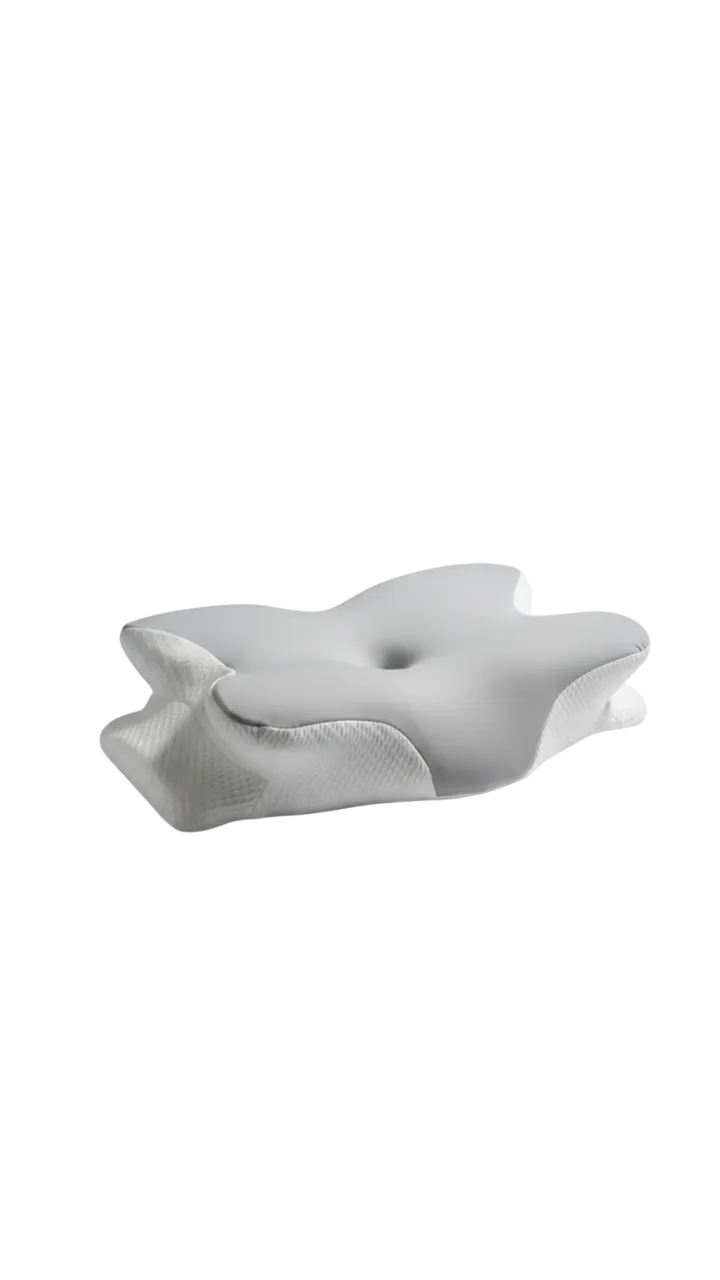
The Lunari Butterfly Pillow naturally supports proper cervical alignment, unlocking deeper, uninterrupted sleep cycles.