The 3 PM Afternoon Slump: Circadian Trough vs. Sugar Crash
Distinguish dietary failures from biological law. Discover why almost every human experiences a mandatory dip in alertness at 3:00 PM, and how to deploy NSDR protocols.
Executive Summary
Distinguish dietary failures from biological law. Discover why almost every human experiences a mandatory dip in alertness at 3:00 PM, and how to deploy NSDR protocols.
It is the most universally shared experience in the global corporate workforce.
You execute a flawlessly productive morning between 9:00 AM and 12:00 PM. You take your lunch break. You return to your desk.
At exactly 2:30 PM, an invisible biological wave completely crushes your executive function. Your eyelids become impossibly heavy. Your brain fog is suffocating. Staring at an Excel spreadsheet feels like lifting a boulder. You desperately walk to the break room, pour a massive cup of hot coffee, and consume a sugary snack to jolt your nervous system back online.
For decades, dieticians definitively blamed this phenomenon on lunch. “It is a sugar crash. You ate a heavy sandwich, and all the blood left your brain to go perform digestion.”
While digestion plays a minor role, blaming a sandwich completely ignores the overriding, undeniable law of human chronobiology. The 3:00 PM crash is not a dietary failure. It is a mandatory biological dip programmed natively into the Suprachiasmatic Nucleus (SCN) of the brain.
1. The Post-Prandial Dip
If you eat a massive, 1,200-calorie lunch consisting almost entirely of highly-refined carbohydrates (pasta, bread, massive amounts of sugar), you deliberately trigger a violent “Post-Prandial Dip” (Post-Meal).
The digestive system demands massive blood flow to break down the dense macronutrients, pulling cardiovascular resources directly away from the prefrontal cortex in the brain. Simultaneously, the pancreas floods the bloodstream with huge volumes of Insulin to shuttle the glucose into the cells, resulting in a sudden crash of blood sugar (reactive hypoglycemia), triggering anxiety and profound lethargy.
But what if you skip lunch entirely? What if you are in a fasted state at 2:30 PM?
You will still experience the crash.
2. The Circadian Trough (The Biological Law)
Even if you eat perfectly, your biological clock mandates an energy dip.
Human alertness is governed by the two main physiological processes:
- The Homeostatic Sleep Drive (Adenosine): The longer you are awake, the more sleep pressure builds in the brain.
- The Circadian Alertness Signal: The SCN broadcasts an intense “stay awake” signal to fight the rising Adenosine throughout the day.
However, the SCN alertness signal is not a perfectly flat, straight line. Almost all mammalian brains operate on a biphasic biological arc. The alertness signal naturally plummets exactly 7 to 8 hours after you first woke up.
If you wake up at 6:30 AM, your brain will automatically trigger a massive, unavoidable plunge in its high-voltage alertness signal right around 2:00 PM to 3:00 PM. This valley in the biological curve is known as the Circadian Trough. Your core body temperature actually slightly drops, mimicking the precise thermal mechanics of nighttime sleep onset.
You are entirely biologically designed to sleep during this window. Throughout human history in equatorial climates, this exact 2:30 PM dip was naturally leveraged to take a siesta to escape the hottest hours of the solar sun.
3. The 3:00 PM Caffeine Trap
Because Western corporate culture completely ignores the Circadian Trough, it pathologizes the mid-afternoon dip as a sign of weakness. Therefore, at 3:00 PM, millions of workers run to Starbucks and ingest 200mg of caffeine.
This is the ultimate chronobiological mistake. Caffeine has a chemical “quarter-life” of 10 to 12 hours. If you ingest 200mg of caffeine at 3:30 PM to fight the Trough, you will have roughly 50mg of active, brutal stimulant physically bonded to the adenosine receptors in your brain at 11:30 PM.
You blasted your way through the afternoon, but you permanently murdered the Stage 3 Deep Sleep architecture required that evening, guaranteeing you will be infinitely more exhausted the following morning.
4. The NSDR Override Protocol (Non-Sleep Deep Rest)
The medically verified solution to the Trough is not to fight it with a stimulant; the solution is to accelerate straight through the bottom of the dip.
When you feel the overwhelming exhaustion at 2:30 PM, your brain is demanding parasympathetic recovery.
- The NSDR Reset: Find a quiet room, lie flat on the floor, put on an eye mask to secure zero lux, and execute a 20-minute guided Non-Sleep Deep Rest (NSDR) or Yoga Nidra audio track. These protocols rapidly drop the brainwaves from Beta directly down to Alpha/Theta frequencies. You do not actually fall asleep. But allowing the brain to rapidly trace the bottom of the Trough for 20 minutes clears massive amounts of neural “junk” and reboots the dopamine system.
- The Walk / Cold Protocol: If you are physically trapped in a cubicle and cannot lie on the floor, you must execute a minor sympathetic shock. Immediately engage in 10 minutes of brisk, outdoor walking while exposed to direct sunlight, accompanied by splashing violently cold water on your face. This manually raises the core body temperature and forces a minor adrenaline spike, safely bridging the gap across the Trough without utilizing caffeine.
Respect the mandatory dip. Recover rapidly. Preserve your evening architecture.
Deepen Your Rest Architecture.
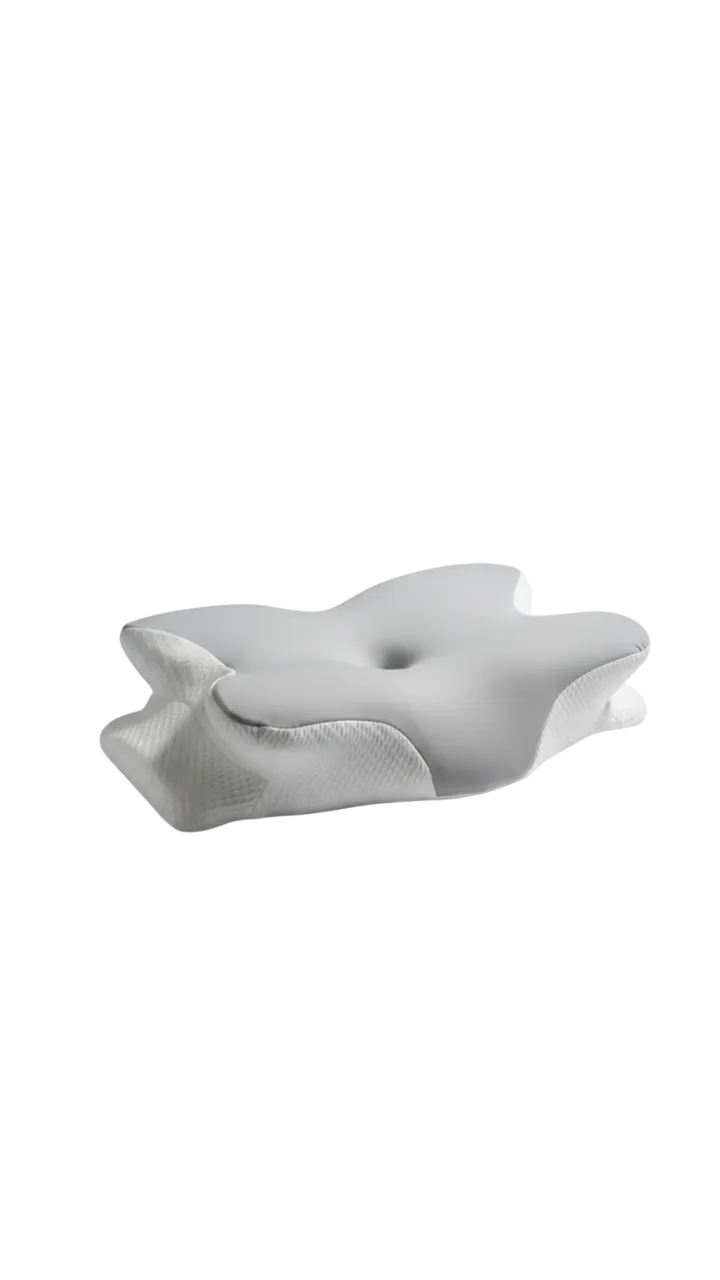
The Lunari Butterfly Pillow naturally supports proper cervical alignment, unlocking deeper, uninterrupted sleep cycles.