How Do You Stimulate the Vagus Nerve? The Parasympathetic Path to Deep Sleep
Master the Vagus Nerve—the most powerful nerve in the parasympathetic nervous system. Learn how to biologically tone it to aggressively drop heart rate and trigger immediate sleep.
Executive Summary
Master the Vagus Nerve—the most powerful nerve in the parasympathetic nervous system. Learn how to biologically tone it to aggressively drop heart rate and trigger immediate sleep.
When someone is suffering from chronic insomnia or crippling pre-sleep anxiety, they are frequently told to “just relax,” “stop thinking,” or “calm down.”
These instructions are scientifically useless. You cannot consciously command your brain to shut off when your physiological hardware is currently pumping adrenaline through your veins. Anxiety and wakefulness are not just thoughts; they are deeply rooted, whole-body biological states.
To transition from a state of hyper-alert stress into a state of profound, restorative sleep, you must manually exploit the biological “brakes” of the human body.
And the absolute master control switch for those brakes is a massive, wandering neural network known as the Vagus Nerve (Cranial Nerve X).
The Anatomy of the Wanderer
The term Vagus is derived from Latin, meaning “wandering” (the root of the word vagabond). It is aptly named, as it is the longest and most complex cranial nerve in the human body.
Originating deep within the brainstem, the vagus nerve travels all the way down through the neck, winding its way through the chest, uniquely wrapping around the heart and the lungs, and plunging deep into the abdominal cavity to connect with your stomach, liver, and intestines.
It is the biological superhighway that literally connects your brain to your major organs.
Crucially, the vagus nerve is the absolute primary commander of the Parasympathetic Nervous System (the “Rest and Digest” system). When the vagus nerve fires, it releases a powerful neurotransmitter called acetylcholine directly into the heart, physically forcing the heart rate to slow down, drastically lowering blood pressure, and instantly commanding the body to downshift into a state of recovery and sleep readiness.
The Measurement: Vagal Tone and HRV
The sheer strength and responsiveness of your vagus nerve is scientifically referred to as your Vagal Tone.
Individuals with high vagal tone can experience a massive spike in stress (like almost getting into a car accident or having a stressful day at work), but the moment the threat is gone, their vagus nerve violently kicks in, immediately dropping their heart rate back to a calm baseline. Their bodies expertly shift gears.
Individuals with incredibly low vagal tone are trapped in a constant, low-grade state of sympathetic “fight or flight” terror. Their heart beats rapidly and rigidly. They cannot fall asleep because their biological brakes are completely worn out.
The gold-standard medical measurement of vagal tone is Heart Rate Variability (HRV). A high HRV explicitly proves your vagus nerve is strong, dominant, and functioning perfectly.
Exploiting the Protocol: How to Stimulate the Vagus
You do not have to wait for the vagus nerve to arbitrarily decide to calm you down. Because it physically wraps around your lungs and your vocal cords, you can actively, mechanically trigger it using specific physiological protocols.
If you are lying in bed, staring at the ceiling, feeling your heart race, execute these biological hacks to manually engage the vagal brakes:
1. The Physiological Sigh
The fastest way to neurologically drop your heart rate in real-time is the double-inhale protocol (popularized by Dr. Andrew Huberman).
- Take a deep, forceful inhale through the nose.
- Immediately tag on a short, sharp second inhale through the nose (this mechanically pops open collapsing alveoli in the lungs).
- Follow it with a long, slow, extended exhale through the mouth.
The Science: When you extend the length of your exhale to be significantly longer than your inhale, you physically slow the heart. The diaphragm moves upward, the heart shrinks slightly, and the brain registers the blood flowing faster, immediately ordering the vagus nerve to release acetylcholine to slow the heart down.
2. Resonance Frequency Breathing
The vagus nerve responds beautifully to strict rhythm. Engaging in symmetrical box breathing (inhale for 4 seconds, hold for 4, exhale for 4, hold for 4) completely bypasses your conscious anxiety. It manually taps into the brainstem’s respiratory center, sending a mechanical signal down the vagus nerve that the environment is entirely safe, allowing the parasympathetic system to flood the body.
3. Thermal Facial Shock
The vagus nerve is highly connected to the mammalian dive reflex. If you cannot sleep due to severe anxiety, get out of bed, go to the bathroom, and aggressively splash ice-cold water on your face (specifically around the eyes and cheeks). The extreme cold sensors heavily stimulate the trigeminal and vagus nerves, commanding an immediate, involuntary drop in heart rate to conserve oxygen.
You do not need to fight your thoughts to fall asleep. You simply need to pull the biological lever that forces your body to rest.
Deepen Your Rest Architecture.
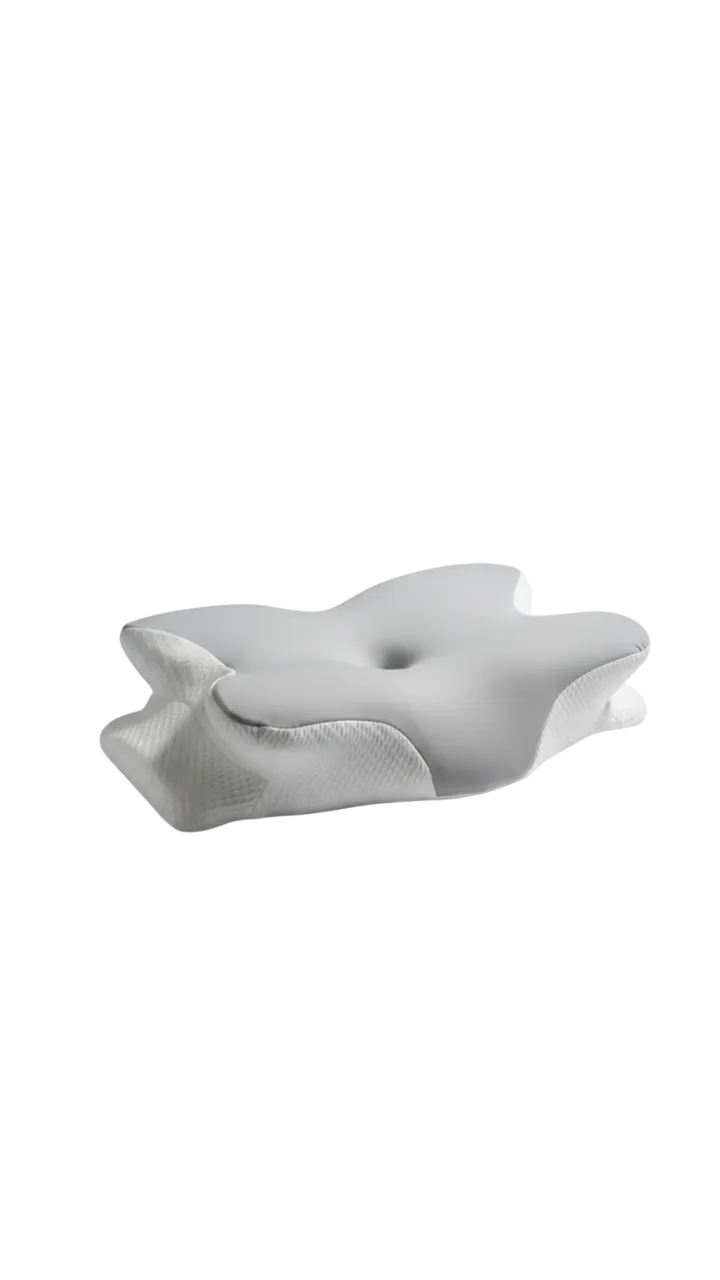
The Lunari Butterfly Pillow naturally supports proper cervical alignment, unlocking deeper, uninterrupted sleep cycles.