Why Do We Sleep Better in the Cold? The Thermal Physics of Rest
Why your body must drop its core temperature by 1-2 degrees Fahrenheit to initiate sleep, and how to hack distal vasodilation.
Executive Summary
Why your body must drop its core temperature by 1-2 degrees Fahrenheit to initiate sleep, and how to hack distal vasodilation.
Falling asleep is not merely a neurological transition; it is an aggressive thermodynamic equation.
For the human brain to cross the threshold from Wakefulness into the architecture of Slow-Wave NREM Sleep, your core body temperature must explicitly drop by 1 to 2 degrees Fahrenheit (0.5 to 1 degree Celsius).
If your core temperature remains highly elevated, the biological mechanisms responsible for initiating sleep remain locked. Understanding how your body vents heat is the ultimate lifehack for instantaneous sleep onset.
1. The Physics of Distal Vasodilation
If the core of your body (your torso and brain) must cool down to trigger sleep, how does it actually expel that trapped heat?
It uses your extremities—specifically the glabrous (hairless) skin surfaces on the palms of your hands, the soles of your feet, and your face. These surfaces contain highly specialized vascular structures called arteriovenous anastomoses (AVAs). These act as biological radiators.
When the sun sets and melatonin begins to signal that nighttime is approaching, your brain immediately opens up these arterial valves. Blood rushes away from your hot core and floods into the capillary beds of your hands and feet.
This process is called Distal Vasodilation.
As warm blood reaches the surface of your cold hands and feet, the heat radiates out into the cooler environment of the bedroom. The now-cooled blood travels back into the center of your body, continually driving your core temperature down, degree by degree, until the strict threshold for sleep onset is met.
This is exactly why you often naturally stick one foot out from under the heavy down comforter at 3:00 AM. Your brain is subconsciously deploying the radiator to prevent thermal buildup and protect the integrity of your deep sleep stages.
2. The Hot Bath Paradox
One of the most clinically proven protocols for rapid sleep onset is taking a hot bath or shower exactly 60 to 90 minutes before getting into bed.
At first glance, this seems contradictory. If you need to drop your core body temperature to fall asleep, why would you immerse yourself in extremely hot water?
The answer is vasodilation. When you step into a hot shower, the intense heat on your skin causes an extreme blood rush to the surface (which is why your skin turns red/pink). You are violently dilating the AVAs in your hands, feet, and face.
The moment you step out of the hot shower into the cool air of your bedroom, your fully dilated capillaries act like massive open vents. Your body aggressively dumps heat into the cold environment, causing your core temperature to plummet far faster and steeper than it would have naturally.
This massive, rapid thermal drop is one of the most powerful biological cues the brain can receive. It instantly accelerates sleep pressure and cuts sleep onset time in half.
3. The 65-Degree Imperative
No matter how perfectly you optimize your vasodilation, if the ambient environment of your bedroom is too warm, the heat cannot effectively radiate out of your body.
Thermodynamics dictates that heat flows from a warmer object to a cooler one. If your bedroom is 74°F (23°C), the temperature gradient is not steep enough for efficient distal venting. The heat will trap against your skin, and your core will struggle to cool down.
Clinical sleep science continually points to an exact ambient target: 65°F (18.3°C) is the globally recognized optimal sleeping temperature for the adult human.
At 65°F, assuming standard bedding, the thermal extraction loop operates at maximum biological efficiency.
4. The Exercise Restriction
If heat kills sleep onset, intense cardiovascular or heavy resistance training too close to your bedtime window is a severe chronobiological error.
Heavy training raises your core body temperature drastically. Because human muscle is a massive thermal engine, it takes between 3 to 4 hours for the core to effectively cool back down to a baseline resting state.
If you deadlift at 8:00 PM and attempt to sleep at 10:00 PM, your core temperature is still heavily elevated. Your brain will register the heat, assume the sun is still high, and actively delay the sleep architecture.
To master your rest, you must become a thermodynamic engineer. Vent the heat, freeze the room, and let the physics pull you into unconsciousness.
Deepen Your Rest Architecture.
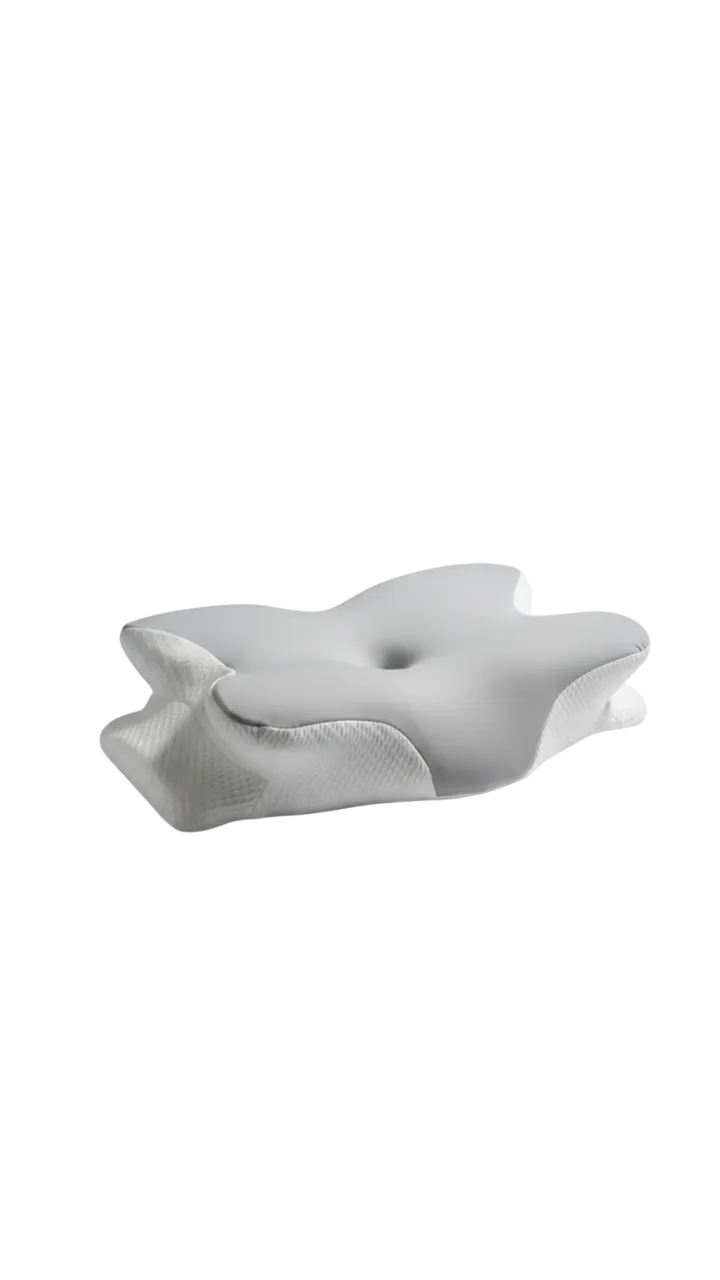
The Lunari Butterfly Pillow naturally supports proper cervical alignment, unlocking deeper, uninterrupted sleep cycles.