How Sleep Deprivation Kills Reaction Time: The Micro-Sleep Danger for Athletes
Why losing just 90 minutes of sleep reduces a professional athlete's reaction time to the legal equivalent of driving drunk.
Executive Summary
Why losing just 90 minutes of sleep reduces a professional athlete's reaction time to the legal equivalent of driving drunk.
At the elite tier of professional sports—whether it is an NBA point guard reading a defensive rotation, a Formula 1 driver braking at 200 mph, or an Olympic sprinter firing off the blocks—the margin between a gold medal and catastrophic failure is measured in entirely in milliseconds.
Athletic greatness does not merely require muscular explosiveness; it requires supreme neurological processing speed.
It requires the brain to perceive a visual threat, calculate trajectory, synthesize an executive decision in the prefrontal cortex, and mechanically fire that decision down the spinal cord to the motor cortex in a fraction of a second.
When you sacrifice sleep, you do not just feel tired. You violently degrade that entire neurological pipeline.
1. The Chemistry of Slower Processors
In controlled clinical environments, sports scientists have measured the exact physiological degradation of human reaction time under increasing loads of sleep debt.
The baseline reaction time of a fully rested, elite athlete responding to a visual stimulus is incredibly fast (often hovering around 200 to 250 milliseconds).
However, if you take that same world-class athlete and restrict their sleep to exactly 6 hours a night for two consecutive weeks, their reaction time degrades in a massive, mathematically predictable downward slope.
Within 14 days of mild sleep restriction, their cognitive processing speed drops by up to 20%. To put that in perspective, the reduction in reaction time, working memory, and situational awareness caused by 14 days of sleeping 6 hours a night is the exact clinical equivalent of being legally intoxicated (a Blood Alcohol Content of 0.08%).
A tired athlete on the field is, neurologically speaking, a drunk athlete.
2. The Phenomenon of the “Micro-Sleep”
The danger extends far beyond simply being “slower.” The true terror of sleep deprivation in high-stakes environments is the Micro-Sleep.
The human brain is an incredibly stubborn survival machine. If it accrues a massive deficit of sleep, it will eventually execute a biological override. No amount of caffeine, willpower, or loud music can stop it.
The brain will selectively, and instantaneously, shut down sections of the cerebral cortex. It literally goes offline.
A micro-sleep can last anywhere from a fraction of a second to a full three seconds. During this window, the athlete’s eyes may still be physically open, but the visual processing centers in the brain are completely blind. They receive zero external data.
In a standard commute home down the highway, a 3-second micro-sleep at 65 mph means the driver travels the length of an entire football field entirely blind and unconscious, leading to devastating crashes. On a basketball court, a half-second micro-sleep is the literal difference between cleanly catching a 30mph pass and experiencing a catastrophic facial fracture.
3. The Athletic Injury Multiplier
When the brain’s processing speed is delayed by 100 milliseconds due to fatigue, it cascades into massive structural injury risk.
When an athlete executes a brutal lateral cut, the muscles and tendons around the knee joint must fire precisely to stabilize the ACL. If the brain’s reaction time to the mechanical stress is delayed by a fraction of a second, the muscles fail to brace in time. The raw kinetic energy is transferred entirely to the ligament, resulting in a devastating tear.
In a massive, multi-year study of high school and collegiate athletes, researchers discovered that athletes who averaged fewer than 8 hours of sleep per night were 1.7 times more likely to suffer a severe structural injury than those who slept more than 8 hours.
You cannot sprint, jump, or react out of a neuro-chemical deficit. Sleep is the ultimate neurological armor.
Deepen Your Rest Architecture.
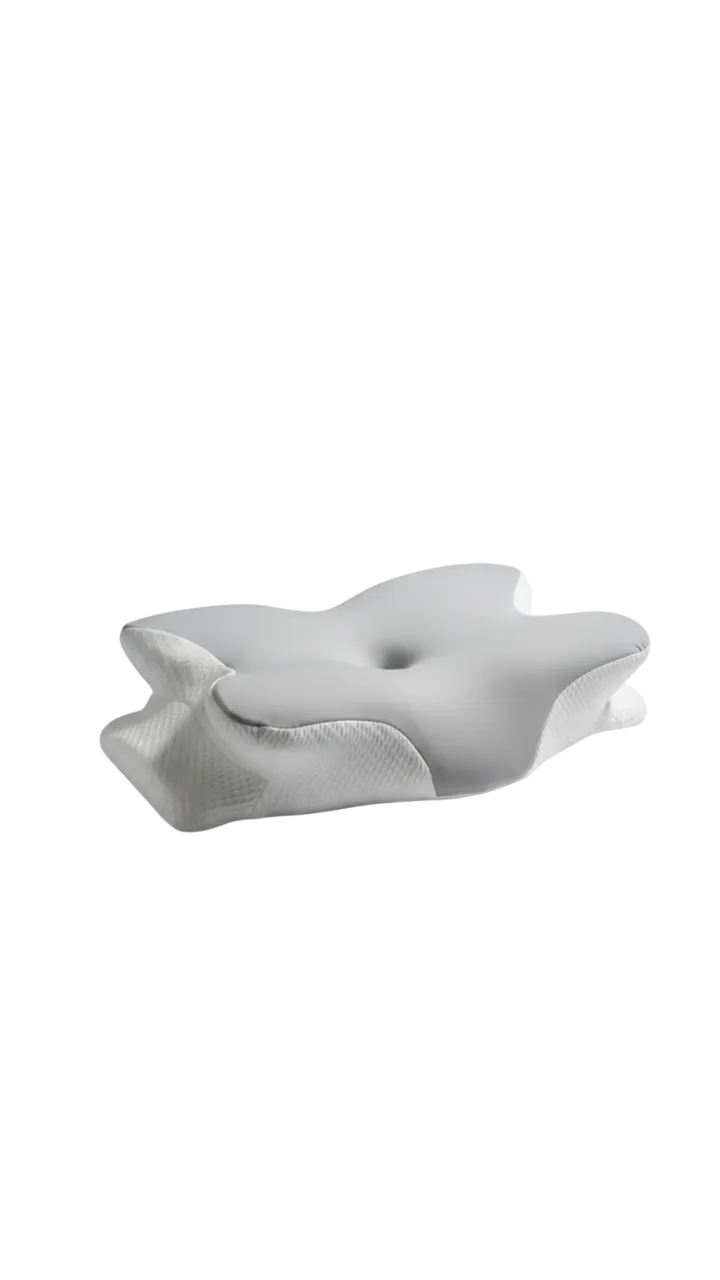
The Lunari Butterfly Pillow naturally supports proper cervical alignment, unlocking deeper, uninterrupted sleep cycles.