How to Fall Asleep Fast: The 10-3-2-1-0 Sleep Rule Explained
Discover the mathematically perfect daily routine designed by sleep researchers to drastically accelerate sleep onset and eradicate evening anxiety.
Executive Summary
Discover the mathematically perfect daily routine designed by sleep researchers to drastically accelerate sleep onset and eradicate evening anxiety.
Humans are the only species on earth that systematically deprive themselves of sleep without legitimate biological cause. We attempt to force unconsciousness at 11:30 PM after a day filled with chemical stimulants, bright screens, and psychological stress.
When you fail to fall asleep quickly, you are not suffering from an intrinsic biological defect; you simply failed to engineer the correct physiological runway.
The most clinically effective framework for establishing this runway is the 10-3-2-1-0 Sleep Rule. Developed by Dr. Craig Richard, this framework assigns strict biological cutoff times to the chemicals, behaviors, and ambient inputs that destroy sleep architecture.
10 Hours Before Bed: Zero Caffeine
Caffeine operates by violently blocking adenosine (the sleep pressure molecule) from binding to the exact receptors in your brain that make you feel tired.
The biological half-life of caffeine is approximately 5 to 6 hours for the average adult. This means that if you consume a 200mg cup of coffee at 4:00 PM, 100mg of that caffeine is still actively circulating in your bloodstream, suppressing sleep pressure, at 10:00 PM. A quarter of it (50mg) is still in your brain at 3:00 AM, actively destroying the depth of your Slow-Wave Sleep.
The Execution: If your target bedtime is 10:00 PM, your absolute, non-negotiable caffeine cutoff is 12:00 PM (noon). This allows the liver 10 full hours to metabolize the chemical entirely before the sleep window opens.
3 Hours Before Bed: Zero Heavy Meals or Alcohol
Digestive metabolism is heavily tied to your core body temperature. When you eat a massive carbohydrate-heavy dinner or consume alcohol just before bed, your gastrointestinal tract immediately spikes its metabolic output to process the calories.
This thermal spike prevents your core body temperature from dropping the required 1-2°F necessary to securely initiate NREM Stage 1 sleep.
Furthermore, while alcohol is a potent sedative that induces rapid unconsciousness, it acts as a total chemical roadblock against Rapid Eye Movement (REM) sleep.
The Execution: 3 hours before your head hits the pillow, all caloric intake stops. You enter a state of circadian fasting to allow your core temperature to begin its steep biological descent.
2 Hours Before Bed: Zero Work
The human nervous system operates on a binary switch: the sympathetic system (fight-or-flight) and the parasympathetic system (rest-and-digest).
Checking work emails, Slack messages, or reviewing financial metrics triggers acute micro-doses of cortisol and adrenaline. It flips the sympathetic switch “ON,” convincing the primitive centers of the brain that a threat is imminent.
The Execution: 2 hours before bed, you must aggressively sever all ties to psychological stressors. The laptop closes. This is the physiological buffer zone required to dial down cortisol and allow the parasympathetic nervous system to take executive control.
1 Hour Before Bed: Zero Screen Time
Your master biological clock (the Suprachiasmatic Nucleus) relies exclusively on the presence or absence of light to dictate when the pineal gland should secrete melatonin (the hormone of darkness).
The backlit LED screens of modern smartphones, iPads, and televisions emit massive concentrations of blue-spectrum light (~480 nanometers). When this specific wavelength strikes your retina at 9:30 PM, your brain interprets it as high-noon sunlight. It instantly halts melatonin production, throwing your circadian rhythm into a state of severe jet-lag.
The Execution: 1 hour before bed, the screens go dark. You switch entirely to analog activities (reading a physical book, stretching, meditating) under dim, red-shifted or amber ambient lighting.
0: Zero Snooze Buttons
The final pillar of the routine happens in the morning.
When the alarm rings, your brain initiates a massive surge of cortisol (the Cortisol Awakening Response) to pull you out of sleep inertia. If you hit the snooze button and drift back into unconsciousness, you actively abort this chemical spike. You trick the brain into descending back into a new sleep cycle, only to violently rip it out again 9 minutes later.
This splinters your neurochemistry, guaranteeing intense cognitive grogginess (“sleep drunkenness”) that will persist until lunchtime.
The Execution: The alarm sounds. You stand up immediately. The cycle repeats perfectly.
Deepen Your Rest Architecture.
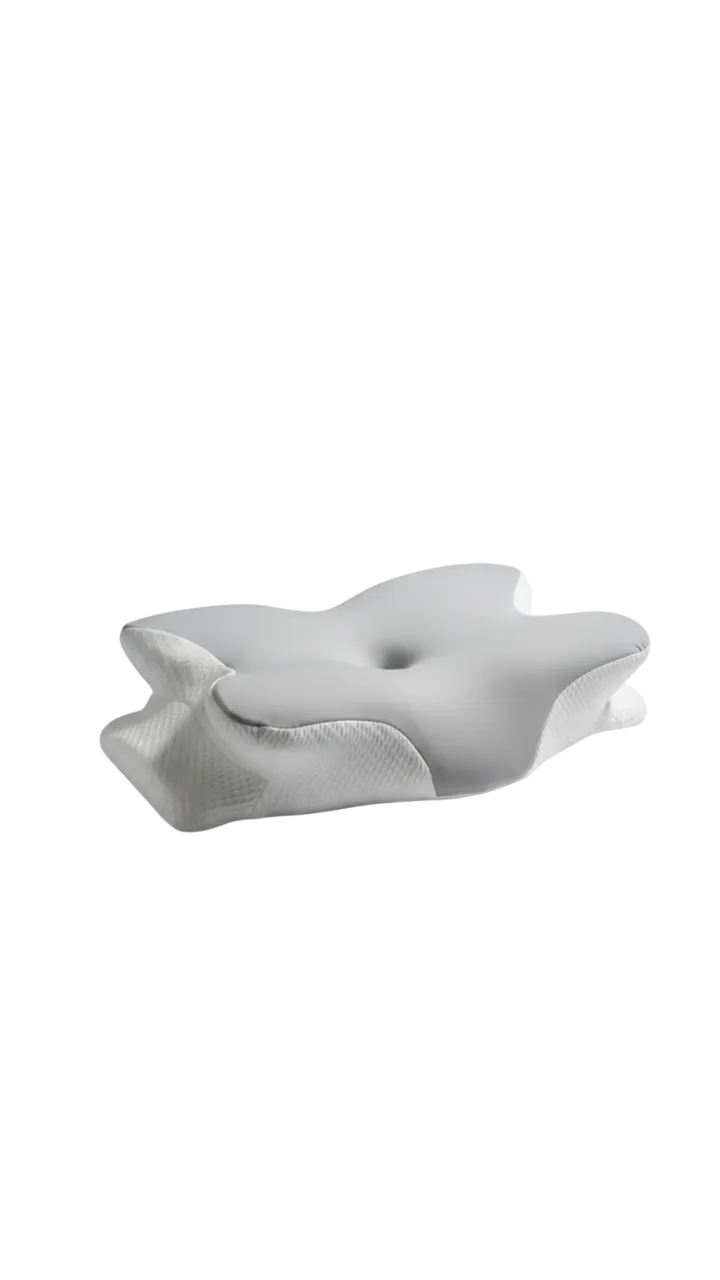
The Lunari Butterfly Pillow naturally supports proper cervical alignment, unlocking deeper, uninterrupted sleep cycles.