Why You Look Tired: How Sleep Deprivation Accelerates Skin Aging (Collagen)
The biochemistry of beauty sleep. Break down how the chronically elevated Cortisol caused by insomnia physically dissolves collagen and elastin in the face.
Executive Summary
The biochemistry of beauty sleep. Break down how the chronically elevated Cortisol caused by insomnia physically dissolves collagen and elastin in the face.
The colloquial term “Beauty Sleep” is arguably the most scientifically accurate phrase in human history.
From a purely evolutionary perspective, humans are highly calibrated biometric scanners. We implicitly scan the faces of other humans to assess disease, fertility, and health. The biological indicators of a sleep-deprived individual—pale skin, swollen eyelids, severe dark circles, and heavy micro-wrinkles—are universally interpreted by the brain as profound sickness and genetic fragility.
The aesthetic changes you see in the mirror after three nights of terrible sleep are not an illusion. They are the immediate, terrifying result of severe endocrinological destruction occurring on a cellular level across your entire epidermal geography.
1. The Cortisol Acid Bath
The destruction of the face is entirely orchestrated by the stress hormone architecture.
As established in the cardiovascular protocols, sleep deprivation is chemically interpreted by the brain as a life-or-death crisis. To keep you awake and responsive, the adrenal glands must flood the bloodstream with massive, sustained quantities of Cortisol.
Cortisol is highly corrosive to certain protein structures. It is particularly hostile to the two primary proteins that form the structural scaffolding of your skin: Collagen and Elastin.
Collagen is the dense matrix that keeps your skin physically thick and plump. Elastin is the microscopic rubber band that allows your skin to bounce back rapidly when stretched.
When you sleep 5 hours a night for 7 consecutive days, the chronically elevated cortisol in your bloodstream acts like an acid bath. It physically breaks the chemical bonds holding the collagen fibers together. It dissolves the elastin. The structural scaffolding of your face rapidly collapses, resulting in deep, immediate micro-wrinkles around the eyes and forehead.
(A highly cited clinical study demonstrated that just one week of restricted sleep caused individuals to explicitly look 5 to 7 years older to an impartial group of observers.)
2. The Vasodilation Paradox (Dark Circles)
The single most infamous hallmark of sleep deprivation is the sudden appearance of heavy, dark, “bruised” circles directly beneath the eyes.
These are not actual bruises, and they are not caused by rubbing your eyes. They are a phenomenon of localized vascular congestion.
When you are deeply sleep-deprived, the body’s cardiovascular system struggles to regulate blood flow. Poor circulation strikes every organ, but it is visually obvious in one highly specific location: the skin under your eyes.
The skin directly beneath your lower eyelid is the thinnest, most translucent layer of epidermis on the entire human body. It is heavily packed with microscopic blood vessels. When cortisol levels are spiked, the blood pressure increases, and the tiny capillaries under the eyes swell and dilate (vasodilation).
Because the skin is so thin, you are quite literally looking through your own skin at a massive pooling of dark, deoxygenated blood trapped in the dilated capillaries beneath the surface.
3. The Dehydration Sink
Sleep is a profound regulator of fluid balance.
During the night, the body relies on the anti-diuretic hormone (Vasopressin) to expertly manage cellular hydration, perfectly balancing sodium and water across the cell membranes.
When you severely restrict sleep, vasopressin regulation is shattered. The body cannot effectively store moisture. The skin barrier becomes heavily physically compromised, allowing massive amounts of transepidermal water loss.
Your skin does not just look dry when you are tired; it is severely, clinically dehydrated on a cellular level. This massive loss of moisture causes the skin to visibly sag, drastically deepening the appearance of fine lines by removing the underlying hydrostatic pressure holding the skin taut.
No amount of expensive hyaluronic acid serums or $500 retinal creams can out-pace a biological cortisol bath. If you want the elastin to stay intact, you must shut the adrenal glands off. You must secure 8 hours of deep, unfragmented Stage 3 rest.
Deepen Your Rest Architecture.
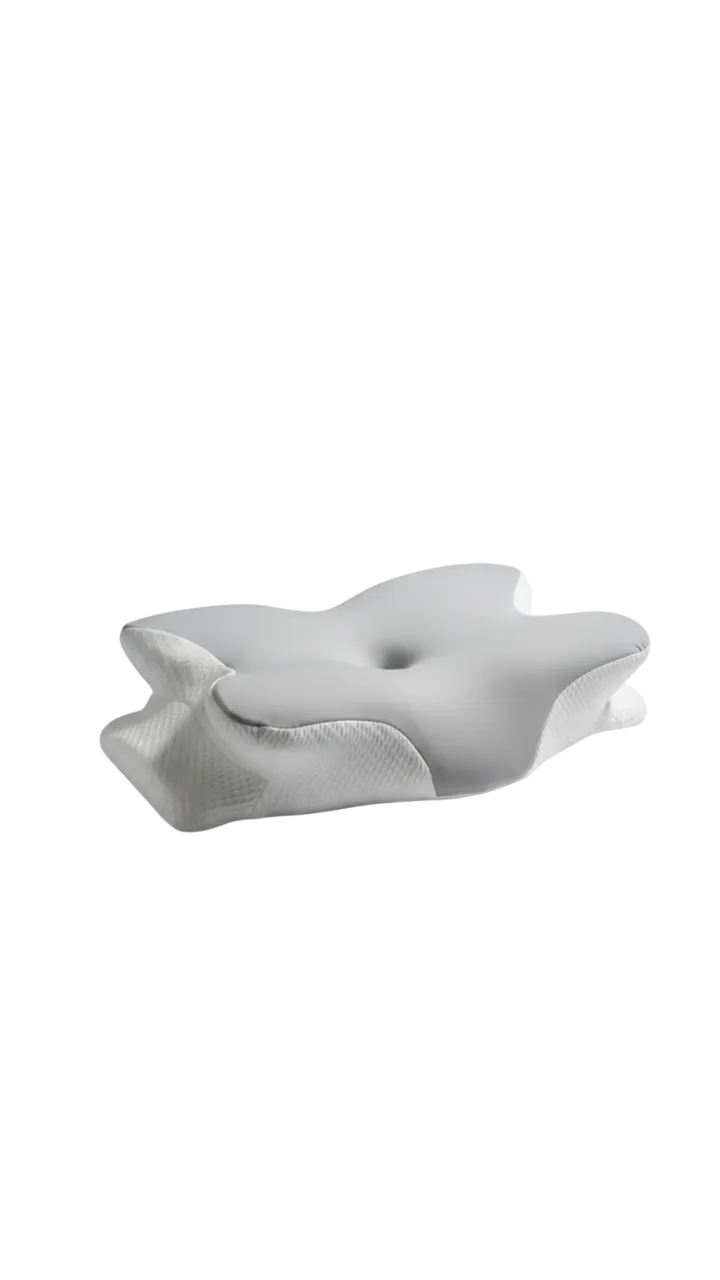
The Lunari Butterfly Pillow naturally supports proper cervical alignment, unlocking deeper, uninterrupted sleep cycles.