Why Polyester Sheets Ruin Sleep: The Thermoregulation Trap
Discover the thermoregulatory disaster of synthetic bedding. Learn why polyester sheets block micro-evaporation, trap severe heat, and trigger waking nocturnal adrenaline.
Executive Summary
Discover the thermoregulatory disaster of synthetic bedding. Learn why polyester sheets block micro-evaporation, trap severe heat, and trigger waking nocturnal adrenaline.
A patient can spend $5,000 on a luxury mattress, perfectly calibrate their bedroom thermostat to an exact 65°F (18.3°C), and utilize the strictest sleep hygiene protocols imaginable. However, if they cover that mattress with a $30 set of standard polyester microfiber sheets, they have biologically compromised their entire sleep architecture.
The physical fabric resting against human skin during sleep is not merely an aesthetic choice. It is a critical layer of active bio-engineering that directly governs The Sleep Microclimate. The biological distinction between naturally sourced organic fibers and oil-based synthetic plastics is the exact difference between restorative deep sleep and a catastrophic, hyper-aroused structural failure.
1. The Physics of the Microclimate
To achieve and medically sustain Stage 3 Delta Sleep, the human hypothalamus must successfully drop the core body temperature by approximately two degrees. It accomplishes this precision cooling through a mechanism known as Micro-Evaporation.
Throughout the night, the human body constantly releases tiny, invisible amounts of water vapor through the skin. As this vapor meets the air and evaporates, it actively pulls heat away from the core body, safely dissipating the thermal energy mechanically into the surrounding bedroom.
This specific cooling sequence requires a highly porous, breathable barrier. Organic Cotton, Linen, and Bamboo are inherently hydrophilic and deeply porous organic structures. They act as biological conduits, easily absorbing the microscopic moisture and rapidly passing it straight through the fabric into the ambient air, allowing the thermoregulation cycle to operate flawlessly.
2. The Polyester Plastic Seal
Polyester, Nylon, and Microfiber sheets are not woven from plants. They are extruded from petrochemicals. They are literal, microscopic threads of plastic.
Because plastic is fundamentally hydrophobic, it is structurally incapable of absorbing human moisture. When a sleeping patient lies under a synthetic duvet cover or microfiber sheets, the organic micro-evaporation process hits a solid, impermeable plastic wall.
The invisible water vapor released by the body cannot cross the synthetic barrier. Instead, it hits the sheets, rapidly condenses back into liquid sweat, and falls directly back onto the patient’s skin. The heat generated by the dense, sleeping body is violently trapped inside the bed, creating a sealed, miniature greenhouse directly against the epidermis.
3. The Adrenaline Awakening
Within exactly two hours of falling asleep, this trapped metabolic heat chemically forces the localized microclimate temperature to skyrocket well past the required 65-degree target.
The sleeping brain registers this rapid thermal spike as a severe biological threat. The hypothalamus realizes the core body temperature is actively rising instead of dropping. To “save” the patient from the imagined fever and forcefully rapidly dump the trapped heat, the autonomic nervous system violently triggers a massive Adrenaline Dump.
The patient’s heart rate sharply spikes. The adrenaline rips them completely out of restorative deep sleep, plunging them into a state of severe, anxious arousal. They violently wake up soaked in trapped sweat, immediately kicking off all the blankets to find cool air.
Because the underlying physical physics of the bed have not changed, the moment the patient pulls the synthetic blanket back over their body, the exact thermal trap resets, dooming them to another adrenaline spike 90 minutes later.
Actionable Clinical Protocols
Eliminating the biological barrier of synthetic plastics is structurally required to stabilize the human thermostat.
1. Organic Long-Staple Cotton (Percale Weave)
The absolute global gold standard for thermoregulation is 100% Organic Long-Staple Cotton woven specifically in a Percale weave. Unlike Sateen weaves, which map tightly together to create a smooth but highly dense thermal boundary, Percale physically employs a “one-over, one-under” geometric structure. This creates macroscopic physical air gaps directly within the fabric, allowing maximum atmospheric airflow and entirely unobstructed micro-evaporation.
2. The Linen Exception (Hyper-Conductivity)
For patients suffering from severe medical menopause or intense, clinical night sweats, 100% French Flax Linen surpasses cotton. The flax fiber is microscopically hollow, creating an incredibly high rate of thermal conductivity. Linen chemically absorbs up to 20% of its own weight in raw human moisture before it ever feels physically damp to the touch, rapidly wicking massive heat spikes away from the core body before the hypothalamus ever triggers an adrenaline response.
3. Mattress Protector Audits
Patients frequently upgrade to expensive organic sheets but retain a cheap, plastic-backed “waterproof” mattress protector directly underneath them. A massive layer of impenetrable polyurethane directly beneath the cotton sheets instantly entirely nullifies the cotton’s breathability, actively reflecting 100% of the body heat right back upward into the spine. Patients must utilize exclusively breathable, purely organic cotton mattress pads to ensure the 360-degree microclimate remains structurally unsealed.
Deepen Your Rest Architecture.
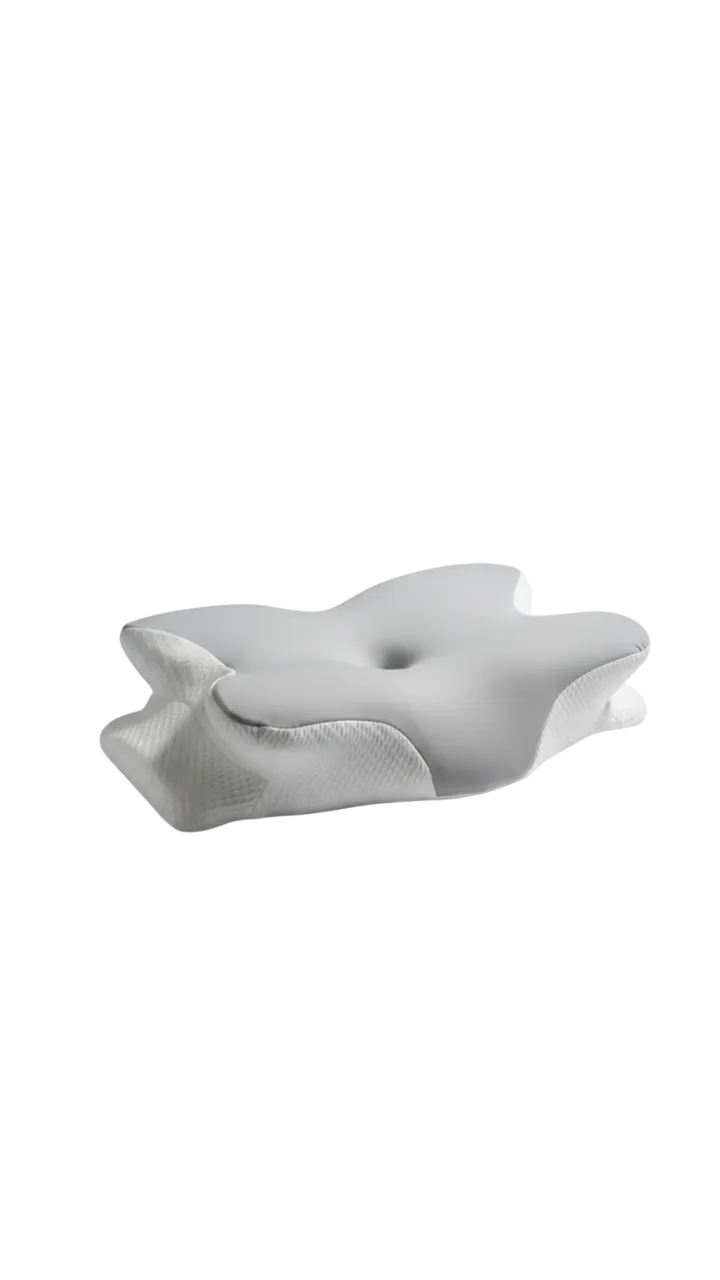
The Lunari Butterfly Pillow naturally supports proper cervical alignment, unlocking deeper, uninterrupted sleep cycles.