Why Dust Mites Wreck Your Sleep: The Nocturnal Histamine Spike
Discover the severe neurobiology of bedroom dust mites. Learn how microscopic allergens in pillows trigger a chemical histamine dump, destroying your deep sleep cycle.
Executive Summary
Discover the severe neurobiology of bedroom dust mites. Learn how microscopic allergens in pillows trigger a chemical histamine dump, destroying your deep sleep cycle.
When a patient reports a chronic, lifelong pattern of waking up with a severely congested nose, a localized scratchy throat, and a profound sensation of brain fog, they frequently falsely attribute the symptoms to an impending cold, seasonal pollen, or the humidity of the room.
In reality, if these symptoms occur exclusively in the morning and vanish by the afternoon, the patient is almost certainly suffering from an acute, localized immunological war happening directly inside their own bed. The enemy is microscopic, incredibly pervasive, and biologically devastating to the human sleep cycle: The House Dust Mite.
Understanding exactly how these microscopic organisms structurally destroy sleep requires moving beyond standard allergy advice and looking directly at the neurochemistry of the human immune response.
1. The Biology of the Infestation
House dust mites do not bite, sting, or burrow into human skin. They are entirely blind, microscopic arachnids that survive exclusively by consuming the dead human skin cells continually shed into mattresses and pillows.
Because a human sheds approximately 1.5 grams of dead skin every single day—the vast majority of it directly into their bedding—a standard, unprotected mattress rapidly becomes an unlimited food source. Within just two years of use, a standard pillow can harbor up to one million active dust mites.
The biological threat to the sleeping human is not the mite itself, but rather a specific, highly potent digestive enzyme found exclusively within the mite’s microscopic feces (the Der p 1 protein). As the sleeper shifts and rolls over during the night, the physical movement acts as a bellows, launching massive clouds of these microscopic toxic proteins directly into the air column immediately surrounding the face.
2. The Histamine Sleep Blockade
When the sleeping patient inhales these invisible proteins, their immune system recognizes a foreign biological invader and responds violently. The immune system commands specialized mast cells in the nasal passages and throat to rupture, dumping massive quantities of Histamine directly into the local tissues.
In standard allergic reactions, histamine causes simple swelling, mucus production, and itching. However, within the specific context of clinical sleep architecture, Histamine is an incredibly powerful, highly disruptive Excitatory Neurotransmitter.
Histamine is the exact chemical the brain naturally utilizes to promote daytime vigilance, learning, and physical wakefulness. When you take an anti-histamine (like Benadryl), you block this chemical, causing severe drowsiness. Conversely, when the immune system artificially generates a massive Histamine spike at 3:00 AM to fight dust mites, it is chemically shocking the central nervous system with the exact molecule designed to keep humans awake.
The brain registers the histamine flood and immediately forcefully blocks the transition into Stage 3 Deep NREM sleep. The patient’s sleep architecture becomes intensely fragmented. They spend the entire night hovering in a shallow, unrefreshing twilight state, their brain chemically unable to deploy the relaxing neurotransmitter GABA because it is being completely overpowered by the immune system’s histamine alarm.
3. The Core Temperature Collapse
Beyond the neurological disruption, a histamine spike actively destroys the body’s precise thermal regulation.
Histamine causes rapid vasodilation—the widening of blood vessels—which increases localized blood flow and tissue swelling. This inflammatory response inherently raises the patient’s core body temperature.
To achieve and maintain deep sleep, the human hypothalamus must orchestrate a precise 2-degree drop in core body temperature. By aggressively raising the baseline temperature, the dust mite allergic reaction fundamentally barricades the body from reaching the required thermal threshold for rest. The patient frequently wakes up sweating, tossing off the blankets, completely unaware that an invisible protein triggered the heating cascade.
Actionable Clinical Protocols
Over-the-counter allergy medications are insufficient for optimizing sleep architecture, as antihistamines inherently disrupt the REM cycle. The only true cure is forcefully eradicating the biological source of the protein.
1. Six-Sided Micro-Encapsulation
The most critical, foundational defense against nocturnal histamine is sealing the primary habitat. Patients must encase their mattress, box spring, and all pillows in medical-grade, six-sided, zippered encasements. The fabric must boast a pore size of exactly 3 microns or less. This perfectly microscopic barrier allows air to pass but physically traps 100% of the mites and their proteins inside the mattress, instantly cutting off their food supply and shielding the respiratory system from exposure.
2. The High-Temperature Thermal Wash
Dust mites easily survive standard warm-water laundry cycles. To achieve a 100% mechanical kill rate, bed sheets and pillowcases must be washed weekly using an aggressive thermal protocol. The water temperature must explicitly exceed 130°F (54°C). If the washing machine cannot reach this temperature natively, the linens must be tumbled in a high-heat dryer for a minimum of 20 minutes before washing to physically dehydrate and destroy the mites at a cellular level.
3. Aggressive Humidity Suppression
Dust mites cannot drink water; they absorb ambient moisture directly from the air through their microscopic exoskeletons. Therefore, they mathematically cannot survive or reproduce in highly arid environments. By utilizing a powerful bedroom dehumidifier to strictly pin the ambient relative humidity precisely below 45%, the mites are subjected to lethal desiccation, effectively sterilizing the bedroom environment organically over a four-week span.
Deepen Your Rest Architecture.
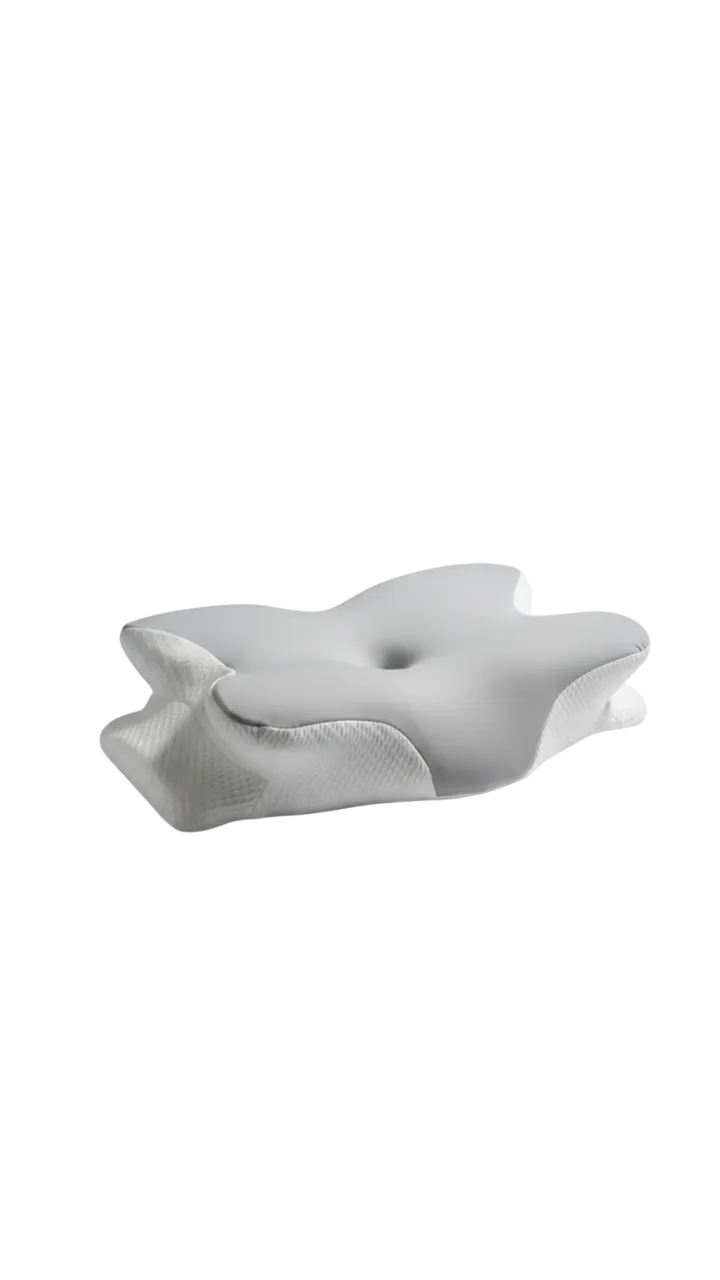
The Lunari Butterfly Pillow naturally supports proper cervical alignment, unlocking deeper, uninterrupted sleep cycles.