How Bedroom Drafts Ruin Sleep: The Localized Wind Chill
Discover the hidden threat of a drafty bedroom. Learn how localized wind chill from a faulty window strips body heat and triggers severe muscular shivering.
Executive Summary
Discover the hidden threat of a drafty bedroom. Learn how localized wind chill from a faulty window strips body heat and triggers severe muscular shivering.
When attempting to biologically optimize the physical bedroom for elite sleep architecture, patients almost entirely focus upon maintaining an exact ambient baseline room temperature of exactly 65°F (18.3°C).
However, patients regularly establish this specific 65-degree ambient baseline, yet still physically wake up at 3:00 AM violently shivering, suffering from an inexplicably stiff, locked-up cervical spine.
The catastrophic biological failure is not the mathematical temperature of the room itself. The failure stems directly from the specific thermodynamic interaction occurring directly across the physical skin surface: a localized, microscopic structural Ambient Draft.
1. The Invisible Wind Chill Effect
To fundamentally understand exactly why a tiny gap in a bedroom window successfully ruins the entire deep Delta sleep cycle, you must understand the exact physics of the Wind Chill Effect.
If a bedroom is perfectly still, the sleeping patient naturally generates a microscopic, perfectly stable bubble of trapped metabolic heat that rests gently against their skin. This layer of warm air explicitly protects the central nervous system from registering the ambient 65-degree room as a threat.
When a faulty window seal allows even a 1 MPH directional draft of cold outdoor air to sweep across the top of the mattress, that gentle bubble of trapped heat is brutally violently destroyed. The continuous, invisible river of cold air forcefully and continuously strips the heat directly off the exposed skin of the patient’s neck and shoulders.
Due to the physics of wind chill, a 65-degree bedroom with a persistent draft actually feels exactly identically to a 55-degree bedroom to the localized skin surface, plunging the patient rapidly into a state of micro-hypothermia.
2. Nocturnal Muscular Defense
The human autonomic nervous system contains millions of advanced thermal receptors designed precisely to monitor for sudden heat loss.
When the localized skin temperature on the back of the neck rapidly drops due to the persistent draft, these specific thermal receptors scream an immediate warning to the brainstem. The brain registers the rapid localized freezing and assumes the core body temperature is about to profoundly crash.
To forcefully natively protect the vital organs from freezing, the brain commands the peripheral muscular system to violently engage. The heavy trapezius muscles, the exact cervical spine stabilizers, and the jaw muscles automatically severely clench. This aggressive muscular contraction is a primitive mechanism designed specifically to artificially generate metabolic heat through sustained friction.
Because the draft is blowing continuously throughout the 8-hour night, the patient’s neck and shoulder muscles remain completely, violently locked in a state of tetanic contraction for hours.
3. The REM Sleep Blockade
True, deep physiological recovery during REM sleep mathematically requires total bodily paralysis (atonia).
If the brain is physically forcing the spinal muscles to remain highly tense and rigidly clenched to fight off the freezing draft, it is chemically completely impossible for the central nervous system to permit the required REM paralysis. The patient is heavily biologically blocked from entering deep sleep.
They spend the entire night trapped in a state of chaotic, hyper-vigilant light sleep, waking up feeling totally unrested with a brutally painful “crick in the neck,” entirely unaware that a 1 MPH invisible breeze fundamentally hijacked their entire muscular system.
Actionable Draft Eradication
You cannot fix a structural draft with a thicker blanket, because the draft typically physically strikes the exposed neck and facial skin heavily resting above the duvet. The environmental leak must be structurally destroyed.
1. The Candle Diagnostics Test
Because micro-drafts are frequently entirely invisible and completely undetectable merely by the human hand, the patient must perform a strict nocturnal acoustic diagnostic. By carefully carrying a fully lit candle slowly around the precise physical perimeter of the closed bedroom window during a windy night, the patient can visibly see exactly where the biological seal has failed. If the candle flame wildly physically flickers entirely near the bottom left window casing, the patient has exactly successfully located the exact ingress point of the thermal attack.
2. High-Density Acoustic Caulk
Standard foam weather stripping frequently rapidly degrades and compresses over time, allowing the draft to immediately return. The window frame must fundamentally be permanently heavily sealed entirely explicitly using industrial-grade, highly dense acoustic silicone caulk. This heavy polymer completely permanently structurally bonds the glass casing directly seamlessly into the drywall, creating an absolute impenetrable physical barrier that permanently eliminates the wind chill variable from the bedroom physics entirely.
Deepen Your Rest Architecture.
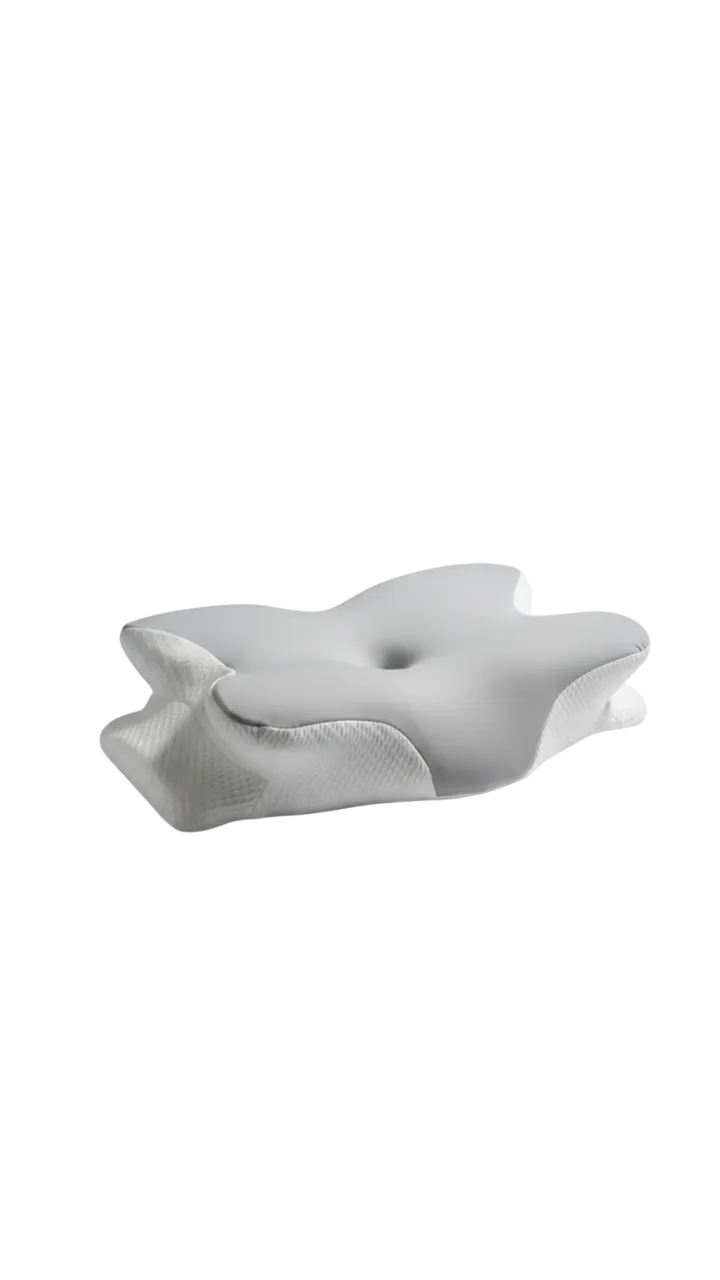
The Lunari Butterfly Pillow naturally supports proper cervical alignment, unlocking deeper, uninterrupted sleep cycles.