What Causes Sleep Paralysis? The Biology of Waking Up Trapped in REM
Demystify the terrifying hallucination of the 'demon in the room' by understanding exactly how the brainstem glitches during the transition out of REM sleep.
Executive Summary
Demystify the terrifying hallucination of the 'demon in the room' by understanding exactly how the brainstem glitches during the transition out of REM sleep.
Of all the sleep disorders diagnosed in clinical medicine, none is as viscerally terrifying, culturally prolific, and profoundly misunderstood as Sleep Paralysis.
Throughout history, this phenomenon has spawned thousands of myths—from the “Old Hag” sitting on a sleeper’s chest in Newfoundland lore, to the “Incubus” demon of the Middle Ages, to modern accounts of alien abductions.
The experience is horrifying: You wake up in the middle of the night. Your eyes open. You are completely, rationally conscious. Yet, your entire body—from your neck to your toes—is rigidly paralyzed. You cannot scream. You feel an immense, crushing pressure on your chest. And almost universally, you hallucinate a dark, malevolent presence standing in the corner of your bedroom.
This is not the supernatural. It is a highly mechanical, explicitly understood neurological glitch in the human brainstem.
1. The Architecture of REM Atonia
To understand the glitch, you must first understand the safety protocol of Rapid Eye Movement (REM) sleep.
When you enter REM sleep, the most advanced, conscious part of your brain (the neocortex) becomes astonishingly active. It begins simulating high-definition, intensely emotional environments. You are running, fighting, failing tests, or flying.
Evolution recognized a massive structural hazard here: If your physical body acted out the violent commands generated by your dreaming brain, you would sprint into a wall or punch your bed partner and die.
To prevent you from injuring yourself, the brain evolved a safety switch. The moment you enter REM sleep, the Brainstem sends a powerful, inhibitory chemical signal down the spinal cord. It explicitly severs the communication between the motor cortex and the voluntary muscles.
You are plunged into a state of total, heavy, physical paralysis. This is clinically known as REM Atonia.
2. The Glitch: Waking Up Too Soon
In a perfectly functioning sleep cycle, as the REM phase ends, the brainstem flips the switch. It lifts the spinal paralysis, and then the higher cortical regions of your brain wake up and regain consciousness.
Sleep Paralysis occurs when this sequence fires out of order.
Your neocortex regains full waking consciousness, but the brainstem has not yet received the secondary command to lift the REM Atonia.
You wake up, fully aware of your surroundings, while the chemical paralysis is still securely locked in across your entire body. The brain’s panic center (the Amygdala) instantly realizes it is trapped and executes a massive fear response.
3. The Hallucination Engine
Why do people virtually always hallucinate a “demon” or a threat during this paralysis?
Because the glitch occurs during the exact threshold of REM sleep, the brain is caught in a hybrid state. You are simultaneously awake and dreaming.
The neocortex is still desperately attempting to project the dream imagery into your conscious reality. Because you are paralyzed, the Amygdala (the threat-detection center) interprets the paralysis as an enormous biological threat—a predator holding you down. The brain then simply “paints” the hallucination onto your physical bedroom to match the sensory input of the paralysis.
It hallucinates a shadow figure standing over you to logically justify why you cannot move. The crushing weight on your chest is merely the sensation of the heavy sleep paralysis overlaid upon your ribcage while your breathing remains slow and autonomic.
4. How to Break the Paralysis Loop
If you suffer from sleep paralysis, the sheer realization that it is a harmless biological glitch is the ultimate defense mechanism.
The Escape Protocol:
- Never Fight the Paralysis: The harder you try to violently thrash your arms or scream, the harder the Amygdala panics, and the darker the hallucination becomes.
- Close Your Eyes: If you see the threat in the corner of your room, you must physically shut your eyes. You cannot hallucinate a visual threat if the sensory feed is cut.
- Focus on the Extremities: REM Atonia primarily locks down the massive muscle groups (the arms, legs, and torso) to prevent catastrophic movement. It often fails to lock down tiny, distal muscles.
- The Override: Do not try to move your arm. Try to violently wiggle a single pinky finger, or scrunch the toes on your right foot. Concentrating massive neural effort into a millimeter of movement in an unchecked extremity is often enough to send a shockwave back up the spinal cord, forcing the brainstem to instantly crash the paralysis and restore full voluntary movement.
Deepen Your Rest Architecture.
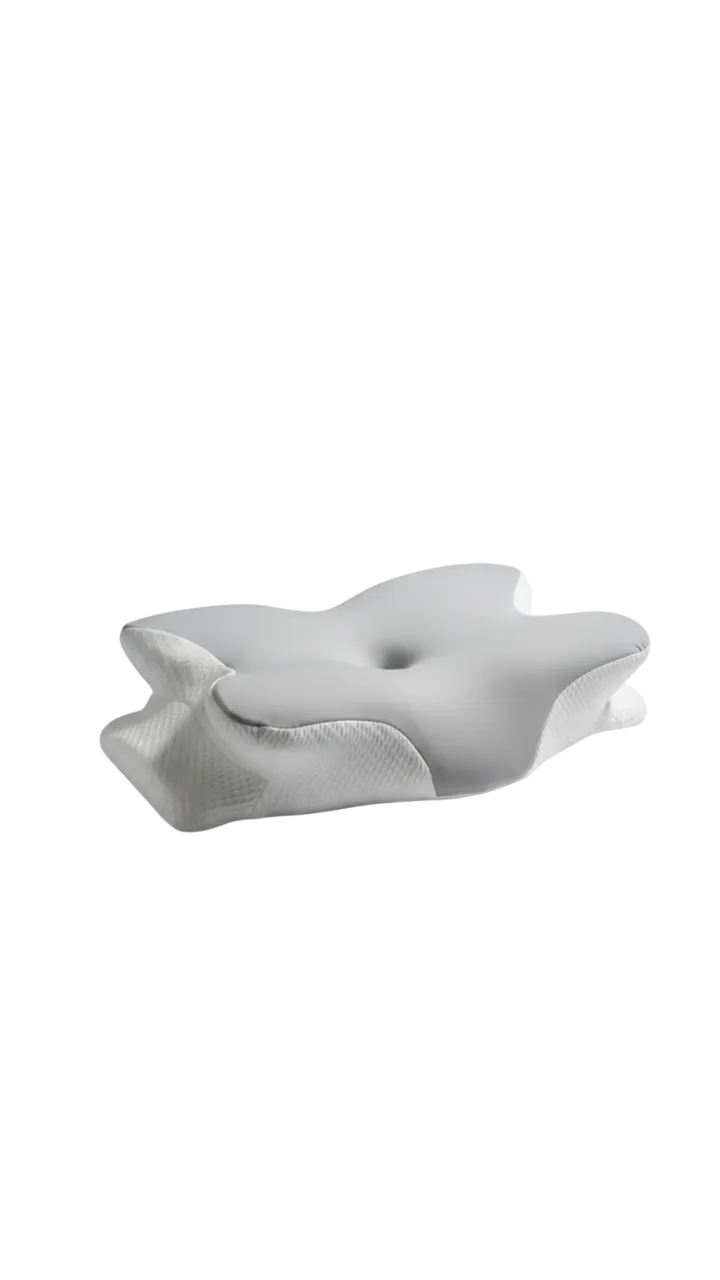
The Lunari Butterfly Pillow naturally supports proper cervical alignment, unlocking deeper, uninterrupted sleep cycles.