Sleep Bruxism: The Neuroscience of Nocturnal Teeth Grinding
Discover the exact clinical biology of Sleep Bruxism. Learn why psychological stress and airway collapse force the sleeping brain to physically destroy the jaws and teeth.
Executive Summary
Discover the exact clinical biology of Sleep Bruxism. Learn why psychological stress and airway collapse force the sleeping brain to physically destroy the jaws and teeth.
Protocol Index
- The Biological Cause: The Central Nervous System Misfire
- Common Triggers and Root Causes
- 1. Severe Psychological Stress and Anxiety
- 2. Undiagnosed Sleep Apnea (The Airway Defense Mechanism)
- 3. Neurochemical Disruption (Caffeine, Alcohol, SSRIs)
- Clinical Symptoms: The Physical Toll
- Actionable Treatments and Clinical Protocols
- 1. The Custom-Milled Acrylic Occlusal Guard (Night Guard)
- 2. Clinical Botox Injections (Botulinum Toxin)
- 3. Sleep Apnea Polysomnography Testing
- 4. Down-Regulating the Sympathetic Nervous System
When dentists diagnose severe tooth wear, fractured enamel, or chronic morning jaw pain, the immediate physical culprit is almost always Sleep Bruxism (Nocturnal Teeth Grinding). However, to truly understand and stop this destructive behavior, patients must realize that Bruxism is fundamentally not a dental problem; it is a severe, highly active movement disorder generated squarely by the central nervous system during sleep.
The human jaw muscles (the Masseters) are among the strongest, most densely packed muscles in the entire body. During waking hours, cognitive logic and physical pain receptors limit the amount of force you can consciously apply to your own teeth. However, when you are deeply asleep and unconscious, the brain’s internal governors are completely shut down.
During an active episode of Sleep Bruxism, the brain forcefully contracts the jaw muscles with an astonishing, terrifying amount of pressure—up to 250 pounds of raw force per square inch. This massive, unchecked pressure physically shreds dental enamel, permanently destroys the Temporomandibular Joint (TMJ), and physically structuralizes chronic, radiating facial pain.
The Biological Cause: The Central Nervous System Misfire
Clinical sleep medicine categorizes Sleep Bruxism as a “sleep-related movement disorder.” It mathematically occurs alongside a phenomenon known as a Cortical Micro-Arousal.
During the transition between deep Stage 3 Delta sleep and Stage 1 light sleep, the brain’s autonomic nervous system experiences a split-second surge of sympathetic (fight-or-flight) activity. In a perfectly healthy sleeper, this tiny chemical spike passes completely unnoticed. The heart rate bumps slightly, the brain registers the electrical shift, and the body immediately returns to deep rest.
For a patient suffering from Sleep Bruxism, this micro-arousal triggers a massive, localized motor response. Exactly as the brain attempts to shift sleep stages, it misfires a concentrated electrical signal directly down the Trigeminal Nerve—the primary cranial nerve responsible for jaw movement and facial sensation. The jaw aggressively snaps shut, locks tightly into place, and rhythmically grinds the lower teeth violently across the upper teeth in short, highly destructive bursts.
These grinding bursts usually last between 3 to 10 seconds, but they can occur dozens or even hundreds of times throughout a single night, exclusively when the patient is entirely asleep.
Common Triggers and Root Causes
Because Sleep Bruxism is a neurological response to internal or external stimuli, it rarely exists in a vacuum. It is heavily correlated with three distinct primary biological triggers:
1. Severe Psychological Stress and Anxiety
The most common and heavily documented trigger for Sleep Bruxism is chronic waking stress. When a patient experiences massive, unrelenting anxiety, their baseline daytime Cortisol (stress hormone) levels skyrocket. This leaves the entire nervous system in a state of continuous “hyperarousal.” At night, even when the body attempts to relax, the heightened nervous system requires a physical outlet to vent the suppressed psychic tension. The brain utilizes the massive power of the jaw muscles as an unconscious, desperate pressure-release valve.
2. Undiagnosed Sleep Apnea (The Airway Defense Mechanism)
In recent decades, sleep pulmonologists have discovered a profound, incredibly dangerous link between Sleep Bruxism and Obstructive Sleep Apnea (OSA). When an apnea patient’s airway collapses during the night, oxygen levels plummet, and the brain enters a state of sheer panic. To survive the suffocating event, the brain desperately attempts to manually force the collapsed airway back open. It rapidly fires the jaw muscles, thrusting the lower jaw forcefully forward to physically open the throat and restore oxygen flow. In these severe cases, the teeth grinding is literally a primal biological survival mechanism preventing the patient from suffocating.
3. Neurochemical Disruption (Caffeine, Alcohol, SSRIs)
The central nervous system’s delicate chemical balance is highly susceptible to external disruption. Consuming massive, late-night doses of caffeine artificially stimulates the motor cortex, significantly increasing the probability of nighttime muscle twitching and jaw clenching. Furthermore, certain classes of modern antidepressants—specifically SSRIs (Selective Serotonin Reuptake Inhibitors)—have been clinically proven to chemically induce secondary Sleep Bruxism in a massive percentage of patients by explicitly altering the brain’s dopamine pathways.
Clinical Symptoms: The Physical Toll
Patients suffering from Sleep Bruxism almost never hear themselves grinding. Because the event occurs entirely unconsciously, the diagnosis usually relies heavily on the profound, painful physical aftermath discovered explicitly the next morning.
- Radiating TMJ Pain: Patients consistently wake up with a dull, severe, throbbing ache located directly in the jaw joint (right in front of the ears). This pain routinely radiates down the neck or entirely across the forehead, mimicking a massive tension headache.
- Acoustic Damage to the Partner: The physical friction of bone grinding against bone under 200 pounds of pressure creates an incredibly loud, eerie, scraping noise. Bed partners frequently describe the sound as “chewing on gravel,” severely destroying their ability to maintain their own sleep architecture.
- Catastrophic Enamel Destruction: Dentists frequently discover perfectly flat, completely worn-down chewing surfaces on the molars. In extreme cases, the pressure physically fractures teeth entirely in half or cracks heavy porcelain crowns overnight.
- Masseter Muscle Hypertrophy: Over several years of continuous nightly bruxism, the actual jaw muscles (the masseters) literally physically bulk up, exactly like a bodybuilder lifting weights. This causes a pronounced, highly noticeable widening and squaring of the patient’s lower jawline.
Actionable Treatments and Clinical Protocols
While stopping the brain from misfiring an unconscious motor signal is neurologically challenging, modern medicine offers highly effective, targeted solutions to completely protect the physical teeth and rapidly dial down the nervous system’s reactivity.
1. The Custom-Milled Acrylic Occlusal Guard (Night Guard)
The absolute, non-negotiable first line of defense is explicitly protecting the actual dental structure from physical destruction. A dentist will utilize a digital 3D scanner to manufacture a perfectly fitted, hard-acrylic upper night guard. Crucially, patients must avoid cheap, soft rubber “boil-and-bite” guards found in drugstores. Soft rubber actively encourages the brain to chew harder, effectively worsening the muscle pain. A hard, perfectly flat acrylic surface physically prevents the upper and lower teeth from fundamentally locking together, drastically reducing the total muscular force the brain can generate.
2. Clinical Botox Injections (Botulinum Toxin)
For patients suffering from devastating, treatment-resistant facial pain and massive TMJ inflammation, neurologists frequently utilize targeted Botox injections. By injecting extremely precise, micro-doses of Botox directly into the massive Masseter and Temporalis muscles, the physician chemically partially paralyzes the muscle fibers. The patient retains full, 100% normal ability to safely organically eat, speak, and smile entirely seamlessly during the day. However, when the sleeping brain attempts to fire the 250-pound grinding signal at 3:00 AM, the chemically weakened muscle simply cannot physically generate the massive destructive force, instantly curing the severe morning TMJ pain within 72 hours.
3. Sleep Apnea Polysomnography Testing
Because of the profound evolutionary link between airway collapse and jaw thrusting, any patient experiencing severe, unexplainable, sudden-onset Sleep Bruxism must rapidly undergo a clinical sleep study (Polysomnogram). If the bruxism is a secondary symptom explicitly caused by the brain desperately fighting for oxygen, treating the root cause with a CPAP machine immediately entirely resolves and eliminates the nighttime teeth grinding indefinitely.
4. Down-Regulating the Sympathetic Nervous System
To tackle the bruxism directly caused by high daytime anxiety, the patient must intentionally, surgically down-regulate their central nervous system before getting into bed. Implementing a powerful 30-minute “wind-down” protocol—utilizing severe digital light restriction, deep slow-wave breathing (Box Breathing), and targeted Magnesium Glycinate supplementation—forces the brain to chemically shift from high-alert sympathetic dominance directly into deep, parasympathetic recovery logically naturally and safely.
Deepen Your Rest Architecture.
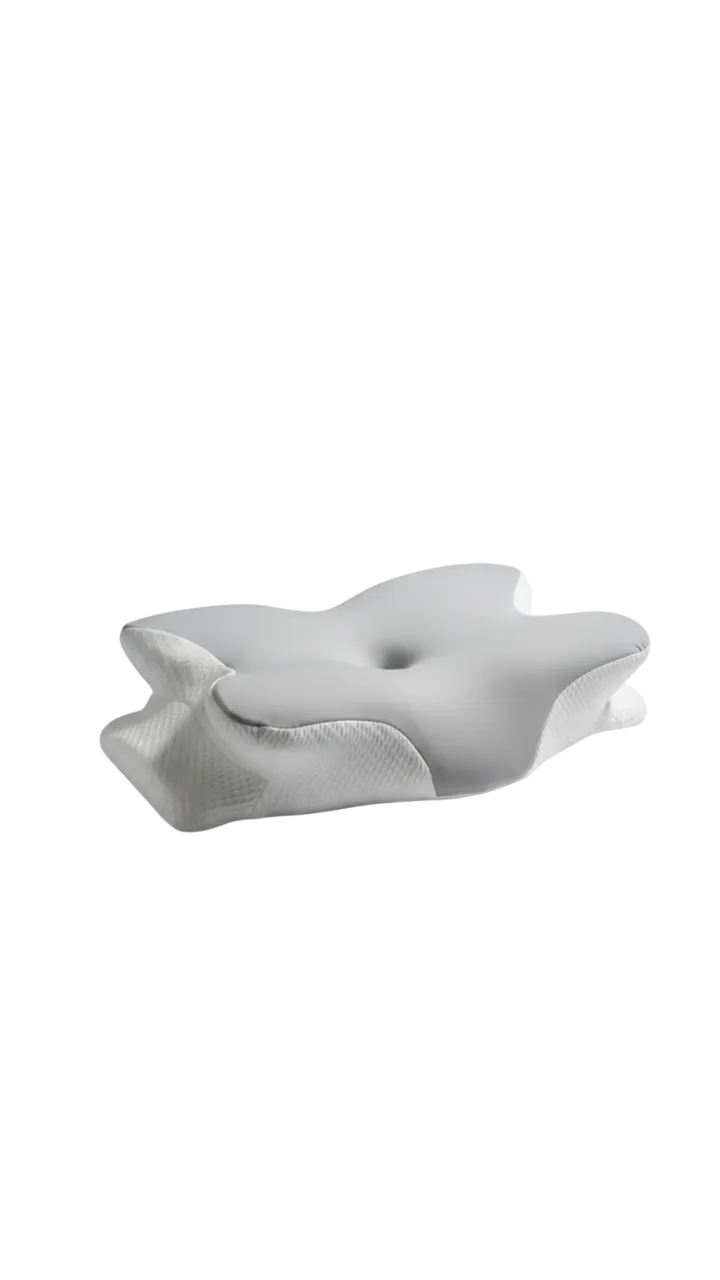
The Lunari Butterfly Pillow naturally supports proper cervical alignment, unlocking deeper, uninterrupted sleep cycles.