Why Do I Grind My Teeth in My Sleep? Sleep Bruxism and Jaw Tension
Understand the explicit neurological triggers forcing you to unconsciously shatter your own teeth at night, including airway resistance and micro-arousals.
Executive Summary
Understand the explicit neurological triggers forcing you to unconsciously shatter your own teeth at night, including airway resistance and micro-arousals.
When a patient visits a dentist with cracked molars, flattened enamel, and acute pain radiating through the Temporomandibular Joint (TMJ), the standard diagnosis is Sleep Bruxism (nocturnal teeth grinding).
The standard dental prescription is a soft, plastic night guard.
While a plastic night guard effectively protects the enamel from shattering, it solves absolutely nothing regarding the neurological root cause. Protecting the teeth does not answer the fundamental, terrifying biological question:
Why is the human brain violently commanding the masseter and temporalis muscles to contract with hundreds of pounds of pressure while the body is supposed to be undergoing peaceful, restorative paralysis?
1. The Airway Resistance Mechanism
Historically, bruxism was entirely blamed on generalized psychological stress. The patient had a difficult day at work, therefore they grind their teeth at night.
Modern clinical sleep science has discovered a far more mechanical, and dangerous, primary catalyst: Upper Airway Resistance and mild Sleep Apnea.
When you fall asleep and the airway tissue in your throat begins to relax and collapse, oxygen flow to the lungs faces massive resistance. The brain immediately detects the restricted oxygen. It recognizes that if the airway continues to collapse, it will suffocate.
To prevent suffocation, the brain executes a brilliant, violent physical override: it fires an intense electrical signal down to the massive masseter muscles of the jaw.
The jaw violently clenches and physically thrusts forward. By clamping down and thrusting the mandible forward, the brain artificially tightens the tissue around the collapsing airway in the back of the throat, mechanically pulling it open.
In this scenario, Sleep Bruxism is not a stress response. It is an automated survival mechanism designed to stop you from choking to death.
2. The Micro-Arousal Cascade
Even if airway resistance is not the primary cause, bruxism is almost universally linked to Micro-Arousals (tiny, 3-to-10-second awakenings from sleep that the patient does not consciously remember).
When a micro-arousal occurs (whether triggered by a sudden noise in the bedroom, a drop in core temperature, or a restless leg movement), the brain rapidly, and momentarily, attempts to shift from sleep back to wakefulness.
This transition violently activates the Sympathetic Nervous System (fight or flight). Heart rate spikes, cortisol surges, and muscle tone is instantly and aggressively restored. Because the jaw muscles are heavily innervated by the trigeminal nerve (which is intimately tied to the brain’s arousal system), the first muscles to receive the shockwave of adrenaline are the jaw muscles.
They clench down with devastating force. As the brain seamlessly slips back into sleep 5 seconds later, the jaw often remains locked in a state of high-tension tetany, silently grinding the enamel away for hours.
3. The REM Sleep Exacerbation
The phenomenon is significantly worse, and more destructive, if it occurs during Rapid Eye Movement (REM) sleep.
A healthy REM cycle requires REM Atonia (total muscular paralysis). This paralysis is supposed to protect the jaw from grinding. However, if the sleep architecture is compromised—specifically by the presence of alcohol in the bloodstream or the use of heavy SSRI antidepressants—the Atonia mechanism glitches.
The brain retains partial muscle tone while deeply asleep. When the emotional intensity of the dream triggers a stress response, the jaw clenches with extreme, unregulated force, uninhibited by the conscious pain receptors that would normally prevent you from biting down so hard while awake.
4. The Clinical Resolution Path
To stop grinding your teeth, you must stop treating the jaw and start treating the sleep architecture.
- The Sleep Study Mandate: If you suffer from severe bruxism, you must undergo a clinical sleep study to explicitly rule out Obstructive Sleep Apnea. If you cure the apnea (via a CPAP or Mandibular Advancement Device), the brain stops struggling for air, and the bruxism vanishes completely.
- The Magnesium Flush: In non-apneic cases, the nervous system is simply hyper-aroused. Following the Huberman Sleep Cocktail protocol (specifically Magnesium L-Threonate or Bisglycinate 60 minutes before bed) physically blocks the NMDA receptors in the brain, aggressively dialing down the glutamate that commands the muscles to twitch or clench.
- The SSRI Check: Review your pharmacology. Many modern antidepressants (specifically SSRIs and SNRIs) famously trigger a massive increase in REM-related jaw clenching.
A night guard protects the tooth, but it ignores the brain. Find the arousal trigger, and the jaw will finally rest.
Deepen Your Rest Architecture.
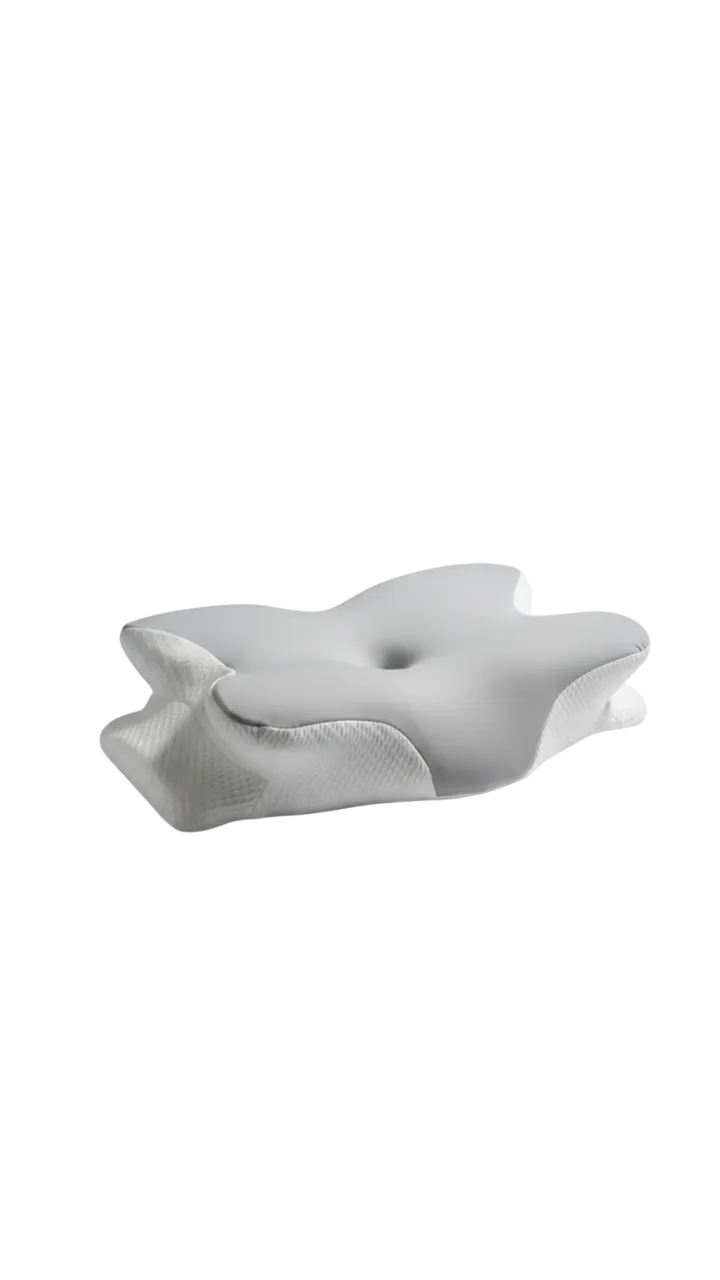
The Lunari Butterfly Pillow naturally supports proper cervical alignment, unlocking deeper, uninterrupted sleep cycles.