What is Obstructive Sleep Apnea? Symptoms, Dangers & CPAP Alternatives
Discover the physical airway collapse occurring hundreds of times a night, why it destroys cardiovascular health, and the clinical alternatives to the CPAP machine.
Executive Summary
Discover the physical airway collapse occurring hundreds of times a night, why it destroys cardiovascular health, and the clinical alternatives to the CPAP machine.
Snoring is often dismissed as a harmless, slightly comedic annoyance. In reality, heavy snoring is the primary acoustic siren signaling a devastating, life-threatening cardiovascular and neurological crisis occurring inside the body.
This crisis is Obstructive Sleep Apnea (OSA).
If you suffer from OSA, you are not simply having a restless night. You are physically suffocating yourself, sometimes hundreds of times an hour, entirely without your conscious knowledge.
1. The Anatomy of an Airway Collapse
When you are awake, the muscles in your neck, jaw, and throat remain highly tense and rigid. They physically hold your airway open like a structurally sound tunnel, allowing oxygen to flow cleanly into the lungs.
When you fall asleep, specifically when the brain stem applies the heavy motor paralysis required during REM sleep, every voluntary muscle in your body goes entirely slack.
For millions of people, this muscular relaxation is catastrophic. Because the muscles lose their tension, gravity pulls the heavy soft tissue at the back of the throat, the base of the tongue, and the soft palate backward. The structures physically collapse onto each other, entirely sealing the airway shut.
You attempt to inhale, but zero oxygen enters the lungs. You are actively choking.
2. The Neurological and Cardiovascular Emergency
As the airway collapses, your blood oxygen saturation drops rapidly. A healthy human sleeps at 98% to 100% saturation. During an apneic event, saturation can plummet into the high 70s or low 80s—levels that would trigger a massive medical emergency in a waking hospital environment.
Because the brain is being starved of oxygen, the primitive survival centers panic. The brain realizes you are suffocating and violently rips you out of deep sleep, forcing an intense micro-arousal.
- The Gasolene Adrenaline Dump: To restart respiration, the brain floods the system with adrenaline and cortisol, drastically spiking blood pressure and violently kickstarting the heart to force a heavy, gasping breath (often sounding like a loud snort).
- The Micro-Awakening: You take the breath, oxygen stabilizes, and the brain instantly drops back into sleep.
- The Loop: Because you fell back asleep, the airway collapses again 45 seconds later.
In severe cases of OSA, this exact cycle of suffocation, adrenaline spike, and micro-awakening occurs 60 to 80 times per hour. Over an 8-hour night, you are suffocating 500 individual times.
Because the brain is constantly pulling you out of Stage 3 and REM sleep to save your life, you receive absolutely zero biological repair. You wake up feeling devastatingly exhausted, despite having been “unconscious” for 9 hours. Over decades, the nightly adrenaline spikes shatter the arterial walls, exponentially increasing the risk of hypertension, strokes, and fatal heart attacks.
3. The Gold Standard: CPAP Therapy
The most effective, universally prescribed clinical solution for OSA is the Continuous Positive Airway Pressure (CPAP) machine.
The mechanism of a CPAP is stunningly simple. You wear a mask over your nose (or nose and mouth). The machine acts as a highly calibrated air compressor. It blows a continuous, invisible pillar of pressurized room air down into your throat.
This pressurized column of air acts as a “pneumatic splint.” It physically props the collapsing tissue open from the inside, preventing the airway from closing. Oxygen flows perfectly, the adrenaline spikes halt instantly, and the patient frequently experiences the most profound, uninterrupted deep sleep of their adult life within 48 hours.
4. Clinical Alternatives to CPAP
While highly effective, CPAP compliance is notoriously low. Many patients find the mask claustrophobic. If a CPAP is untenable, there are extreme clinical alternatives:
- Mandibular Advancement Devices (MAD): A highly specialized, custom-molded dental device worn at night. It physically locks the lower jaw (the mandible) and pushes it forward by several millimeters. By advancing the jaw, it manually pulls the base of the tongue forward, artificially creating space in the back of the throat to prevent collapse.
- Positional Therapy: Over 50% of OSA cases are violently exacerbated by gravity when sleeping supine (flat on the back). Transitioning strictly to lateral (side) sleeping using advanced body pillows can reduce apneic events by up to 50%.
- Hypoglossal Nerve Stimulation (Inspire): In extreme cases, a pacemaker-like device is surgically implanted inside the chest. It monitors your breathing and fires a mild electrical pulse directly into the hypoglossal nerve (which controls the tongue) during every single inhalation, forcing the tongue to automatically flex away from the airway.
Sleep Apnea is not a sleep disorder; it is a cardiovascular crisis disguised as snoring. Treat the airway, save the heart.
Deepen Your Rest Architecture.
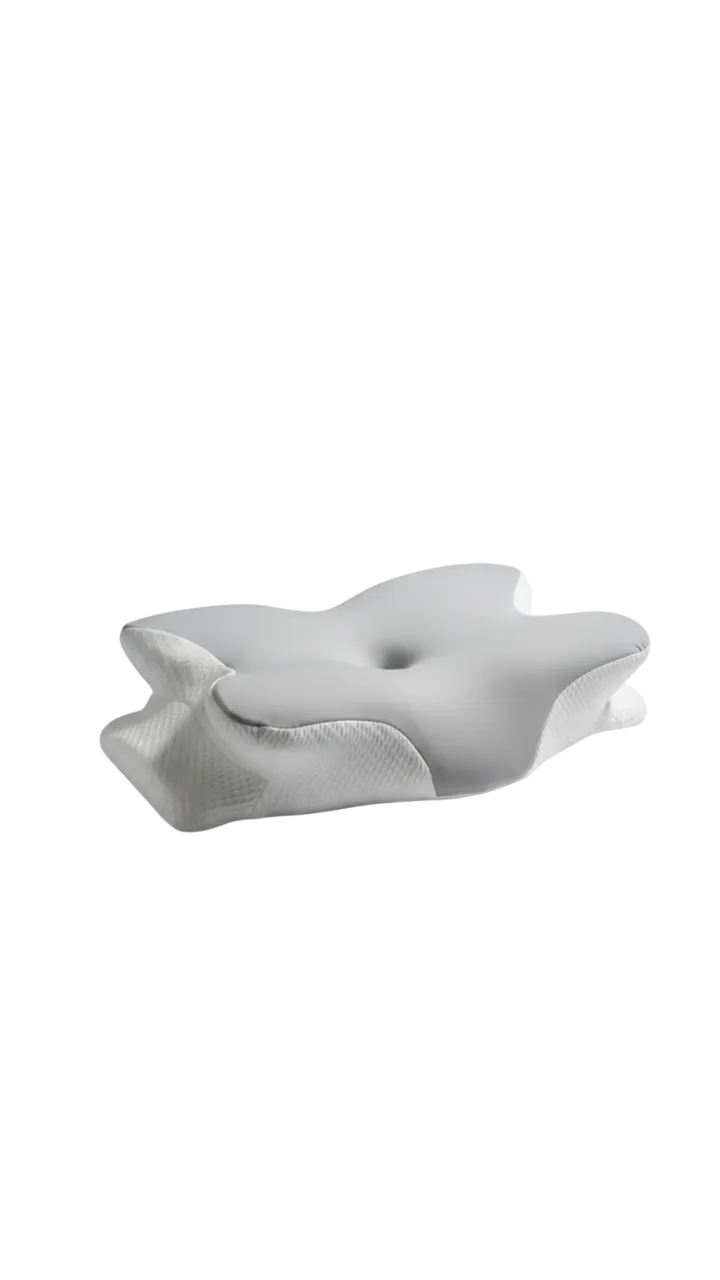
The Lunari Butterfly Pillow naturally supports proper cervical alignment, unlocking deeper, uninterrupted sleep cycles.