How Acid Reflux Worsens Sleep Apnea: The Bi-Directional Vacuum
Discover the severe bidirectional relationship between Acid Reflux and Sleep Apnea. Learn exactly why nocturnal GERD chemically destroys your airway and severely fragments your sleep architecture.
Executive Summary
Discover the severe bidirectional relationship between Acid Reflux and Sleep Apnea. Learn exactly why nocturnal GERD chemically destroys your airway and severely fragments your sleep architecture.
When patients present to sleep clinics complaining of chronic, severe nocturnal heartburn, frequent morning sore throats, or waking up violently coughing and choking, the standard medical reflex for decades was simply to prescribe a massive dose of a Proton Pump Inhibitor (like Omeprazole) to blindly suppress stomach acid.
However, modern respiratory sleep medicine has completely revolutionized this approach. Clinical data now explicitly proves that severe nocturnal Gastroesophageal Reflux Disease (GERD) and Obstructive Sleep Apnea (OSA) are not separate, isolated conditions. They are deeply, structurally intertwined within a catastrophic, self-amplifying biological feedback loop.
Treating the heartburn without treating the airway collapse, or vice versa, is a mathematical guarantee of therapeutic failure. To cure the nocturnal choking and stop the resulting severe sleep fragmentation, you must understand exactly how the lungs physically suction stomach acid upward.
1. The Physics of the Apnea Vacuum
Obstructive Sleep Apnea occurs when the incredibly heavy, paralyzed muscles of the soft palate and the base of the tongue physically collapse into the upper airway during deep sleep. This collapse creates a literal, airtight biological seal, preventing oxygen from entering the lungs.
When the airway closes, the brain registers dropping oxygen saturation and signals the diaphragm (the primary muscle of respiration) to pull harder. The diaphragm instinctively begins heaving with massive physical force, desperately trying to manually pull air past the obstruction.
This violent respiratory effort against a closed airway creates an extreme, massive Negative Intrathoracic Pressure Variable—essentially generating a powerful biological vacuum inside the chest cavity.
This vacuum is incredibly strong. Because the lungs cannot pull air from the blocked mouth, the intense suction force diverts downward to the path of least resistance: the esophagus and the stomach. The negative pressure violently forcefully rips open the Lower Esophageal Sphincter (the muscular valve designed to keep stomach contents completely contained).
Within seconds, the massive vacuum literally sucks raw gastric acid, entirely undigested food, and digestive enzymes straight up out of the stomach, up the esophagus, and precisely into the delicate tissues of the throat and vocal cords. You are not “refluxing” naturally—your own airway collapse is manually pumping the acid into your throat.
2. Acid Induced Airway Swelling
The presence of highly corrosive gastric acid inside the upper airway triggers the second, devastating half of the feedback loop.
When stomach acid physically contacts the extremely delicate mucosal lining of the pharynx and larynx, it causes immediate, massive chemical burns. The body responds to this severe tissue damage by instantly triggering localized, intense inflammation. The tissues lining the throat rapidly swell, drastically reducing the physical diameter of the airway.
By chemically burning and swelling the back of the throat, the GERD has completely mathematically guaranteed that the airway is significantly narrower for the rest of the night. A narrower airway requires far less muscle relaxation to completely collapse, directly triggering far more severe apnea episodes in the exact same hour.
This creates a terrifying physiological cycle: The apnea creates the vacuum that sucks up the acid. The acid structurally burns the throat. The swollen throat inherently causes more apneas. The additional apneas suction up even more acid.
3. The Micro-Arousal Sleep Fragmentation
While the airway burns, the brain’s internal sleep architecture completely splinters.
Each time stomach acid hits the back of the throat, even if the patient never physically chokes or fully wakes up, the brain stem registers a severe survival threat. The autonomous nervous system instantly fires an emergency “Micro-Arousal.”
A micro-arousal is a hidden, 5-second neurological explosion. The brain violently spikes cortisol and adrenaline to force the patient from deep, restorative Delta sleep into Stage 1 Light Sleep, specifically just to execute a massive, defensive “swallow” reflex to clear the acid.
Because GERD patients can suffer from hundreds of these invisible micro-arousals every single night, their brain mathematically loses the absolute ability to sustain deep NREM and REM sleep. They wake up fundamentally exhausted, severely brain-fogged, and experiencing massive daytime lethargy, entirely completely unaware that an invisible acid reaction stole all of their physical recovery.
Actionable Clinical Protocols: Breaking the Cycle
Prescription antacids (PPIs) only make stomach fluid physically less acidic—they do absolutely nothing to stop the physical vacuum from sucking biological fluid into your lungs. To break the apnea-acid loop, you must fix the physics of the airway.
1. CPAP as the Ultimate Acid Blocker
The most powerful, mathematically definitive cure for severe nocturnal GERD is successfully treating the underlying Obstructive Sleep Apnea using a CPAP (Continuous Positive Airway Pressure) machine.
By providing a constant, gentle physical stream of pressurized air, the CPAP acts as a perfectly engineered pneumatic splint. It permanently mathematically props the upper airway entirely open. Because the airway never collapses, the diaphragm never has to violently heave. Because the diaphragm never heaves against a blocked throat, the massive chest vacuum is entirely eradicated.
Without the vacuum, the stomach acid perfectly obediently stays deeply anchored in the stomach exactly where it belongs, curing both the apnea and the severe reflux simultaneously on the very first night.
2. Left-Lateral Decubitus Positioning
If a patient is not on CPAP therapy, the physical angle of their sleep posture explicitly mechanically dictates the severity of the reflux.
Due to the precise asymmetrical, anatomical curvature of the human stomach, sleeping flat on your right side positions the esophageal valve completely physically underwater, submerging it entirely in gastric fluid and guaranteeing massive acid leakage.
Conversely, specifically strategically sleeping exclusively on the Left Side (Left-Lateral Decubitus Position) manually elevates the esophageal junction safely cleanly above the pool of stomach acid. Gravity forcefully reliably traps the corrosive fluid precisely in the lower curvature of the stomach, mechanically reducing the chemical volume of nocturnal reflux by over eighty percent without a single drop of medication.
3. The 3-Hour Gastric Emptying Rule
The stomach physically heavily relies on gravity and time to process food into the small intestine. Consuming a 1,000-calorie dense dinner at 9:00 PM and lying completely flat at 10:00 PM ensures the stomach is entirely physically distended. Patients must enforce an absolute, non-negotiable 3-hour fasting window before bedtime. If nothing enters the mouth after 7:00 PM, the stomach is entirely empty and structurally deflated by 10:00 PM, mathematically starving the apocalyptic vacuum of any fluid to pull upward.
Deepen Your Rest Architecture.
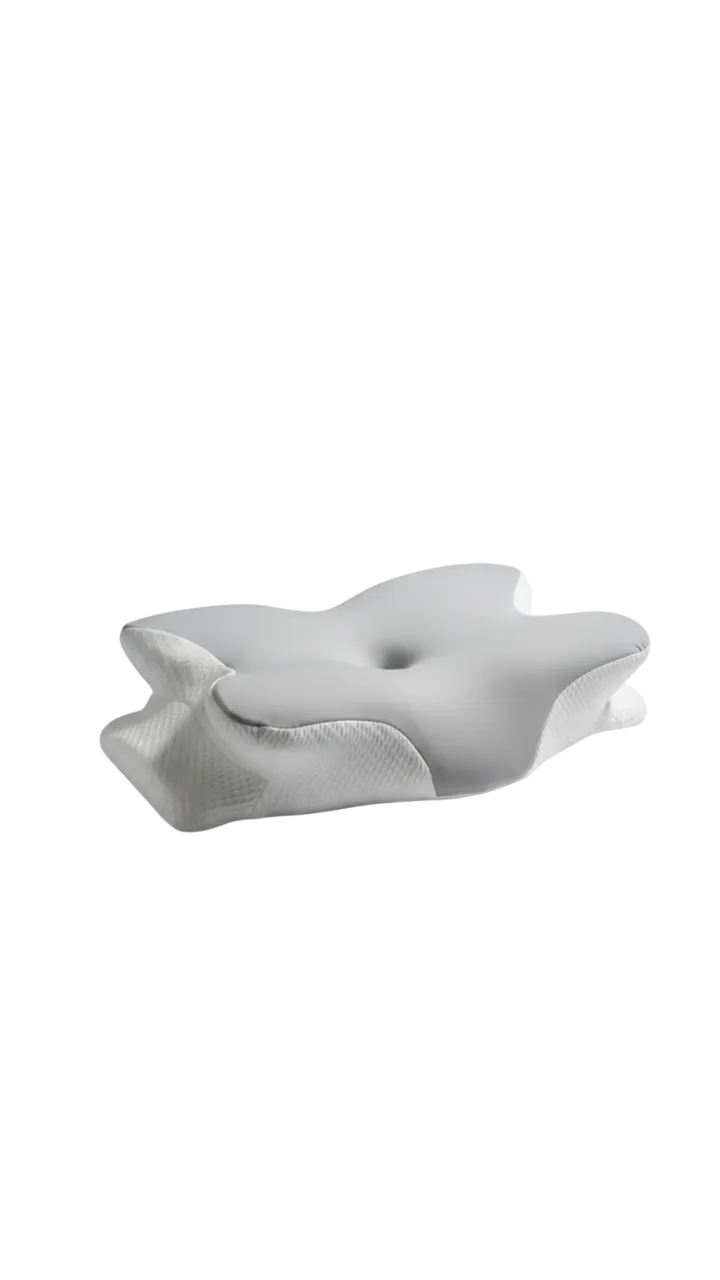
The Lunari Butterfly Pillow naturally supports proper cervical alignment, unlocking deeper, uninterrupted sleep cycles.