Catathrenia (Sleep Groaning): The Respiratory Glitch
Discover the precise mechanics of Catathrenia. Learn why this rare parasomnia forces patients to emit long, loud, eerie groaning sounds entirely unconsciously every single night.
Executive Summary
Discover the precise mechanics of Catathrenia. Learn why this rare parasomnia forces patients to emit long, loud, eerie groaning sounds entirely unconsciously every single night.
Protocol Index
Often heavily misdiagnosed by primary care physicians as a psychological manifestation of nightmares or simply written off as advanced sleep apnea, Catathrenia (Nocturnal Groaning) is fundamentally a distinct, rare respiratory-based sleep disorder.
Patients suffering from Catathrenia emit loud, prolonged, eerie groaning or moaning sounds repeatedly throughout the night. Unlike Somniloquy (Sleep Talking), there are zero spoken words, no mumbling, and no physical movement. It is purely a mechanical, acoustic phenomenon deeply tied to the physical structure of the airway during specific sleep cycles.
The Exhalation Resistance
To medically understand Catathrenia, neurologists distinguish it heavily from snoring.
Standard snoring is entirely built upon inhalation—the patient struggles to actively pull air through a collapsed upper airway. Catathrenia operates exactly in reverse. It is an exhalation disorder.
During specifically prolonged REM sleep cycles, the patient naturally takes a deep, unhindered breath inwards. However, as they attempt to quietly exhale, their vocal cords and upper respiratory tract chemically structurally lock. To force the trapped air out of the lungs against this biological resistance, the body physically bears down. The slow, forced escape of high-pressure air directly past the tensed vocal cords naturally generates the unmistakable, haunting groaning sound.
The REM Paradox
Remarkably, despite the intense acoustic noise, Catathrenia is generally clinically harmless to the actual patient.
Unlike Sleep Apnea, there is zero drop in blood oxygen saturation, and the brain does not register the event as a dangerous choking emergency. The patient sleeps deeply, maintains perfect cardiovascular health, and wakes up feeling entirely fully refreshed. The medical danger of Catathrenia lies almost exclusively in the catastrophic, chronic sleep deprivation it inflicts upon their bed partner.
Deepen Your Rest Architecture.
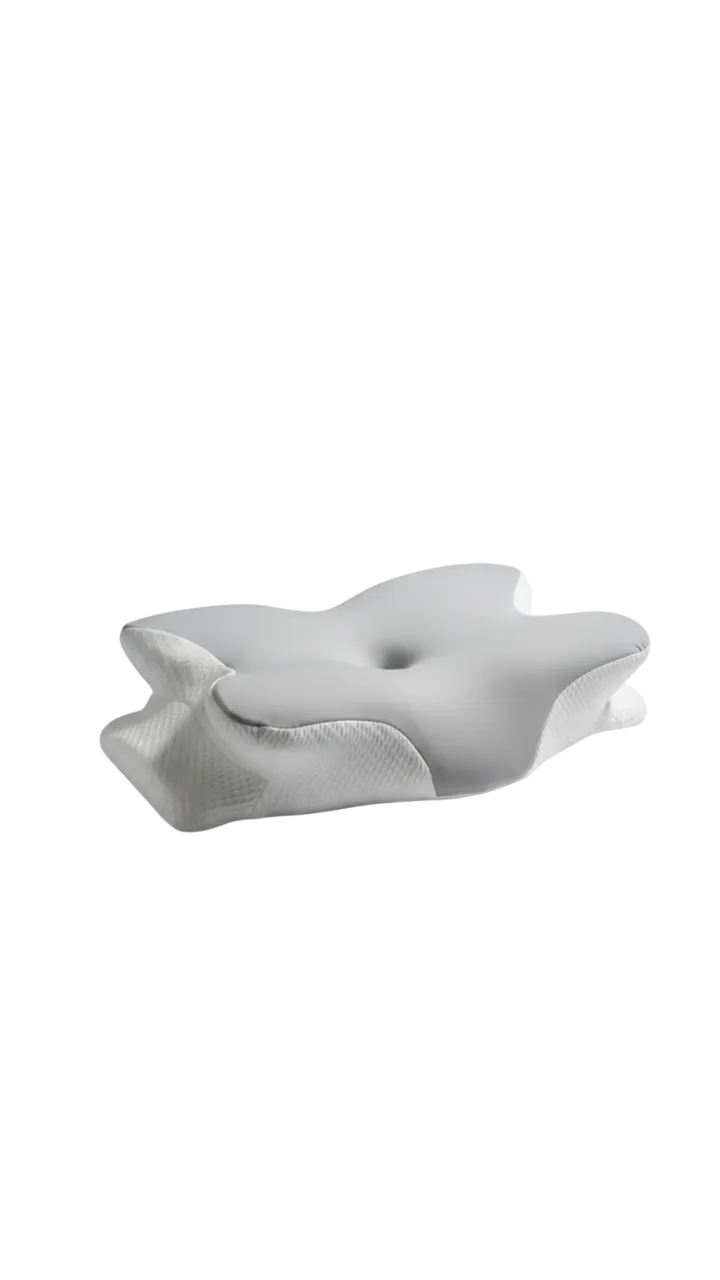
The Lunari Butterfly Pillow naturally supports proper cervical alignment, unlocking deeper, uninterrupted sleep cycles.